
Hitting revenue goals feels good, but at the end of the day, profit is what really matters. In eCommerce, growing topline sales doesn’t always mean growing profit. Rising ad costs, free shipping expectations, return rates, and platform fees often eat away margins faster than most brands realize.
That’s where eCommerce contribution margin comes in. It is the profitability metric that separates fancy numbers from real business performance. Today, the smartest D2C brands treat data as their ROI engine. In fact, D2C brands that use data-driven marketing outperform peers by 20–30% in revenue and retention. In this case, it is crucial for finance and marketing teams to see beyond revenue and ROAS and understand which SKUs, campaigns, and channels actually make money.
This article explains everything you need to know about eCommerce contribution margin, how to calculate it, and how to improve it using data-backed strategies.
Is your data actually Decision-Grade?
9 questions. 3 minutes. Score your Profitability Visibility and Readiness for AI-driven growth.
Start Free Diagnostic
What is eCommerce Contribution Margin
In finance, “contribution margin” simply means revenue minus variable costs.
i.e. Contribution Margin = Net Revenue – Variable Costs
In eCommerce, however, the equation gets more nuanced because variable costs extend beyond just product manufacturing.
Variable costs typically include:
- Cost of goods sold (COGS); product and packaging costs.
- Shipping and fulfillment fees, including carrier and 3PL charges.
- Payment processing fees charged by Shopify, PayPal, Amazon, etc.
- Marketing and advertising spend on Meta, Google, TikTok, influencer costs.
- Discounts and returns (refunds, replacements, or promotions that reduce real earnings).
What makes this metric powerful is that it reflects the actual cash flow impact of every order. Unlike gross margin, which only subtracts COGS, contribution margin captures every variable cost that moves with sales volume.
So, if your sales double but your ad spend or shipping costs double as well, your contribution margin reveals whether that growth is sustainable or just expensive.
Contribution Margin Ratio
While the raw dollar figure tells you about the absolute profit per unit or campaign, the contribution margin ratio (CMR) expresses it as a percentage of revenue:
Contribution Margin Ratio = (Contribution Margin ÷ Revenue) × 100
This ratio shows what percentage of each sales dollar contributes to covering fixed costs and profit.
How to Calculate eCommerce Contribution Margin
Follow these steps to figure out your eCommerce contribution margin accurately:
Step 1: Identify Your Net Revenue
Net revenue is your total sales minus discounts, refunds, and chargebacks.
Example:
If your store sold $100,000 last month, but issued $10,000 in discounts and $5,000 in returns, your net revenue = $85,000.
Step 2: Determine Variable Costs
List all expenses that fluctuate with sales volume:
Example:
- COGS: $30,000
- Shipping: $12,000
- Marketing: $18,000
- Payment Fees: $4,000
- Returns/Discounts: $6,000
Total Variable Costs = $70,000
Step 3: Apply the Formula
This means $15,000 remains to cover fixed costs (like salaries, rent, and software) and generate profit.
Step 4: Calculate the Contribution Margin Ratio
A 17.6% contribution margin means that for every dollar in revenue, about $0.18 contributes to profit after variable costs.
Step 5: Compare Across SKUs, Channels, or Campaigns
The real power of contribution margin emerges when you analyze it comparatively:
- By SKU: Identify profitable vs. loss-making products.
- By Channel: Compare Shopify vs. Amazon vs. Wholesale.
- By Campaign: Evaluate Meta vs. Google vs. TikTok efficiency.
Why Gross Margin Isn’t Enough
Gross margin is useful but incomplete. It only tells you how much you make after deducting the cost of goods sold. It doesn’t account for variable costs like ads, shipping, or payment fees, which can make or break your true profitability. That’s why ecommerce leaders today use contribution margin eCommerce as their north star metric.
The Importance of eCommerce Contribution Margin
In conversations with eCommerce finance and marketing teams, one theme stands out: brands are moving away from tracking just topline revenue metrics to focusing on contribution margin against budgets. Instead of asking, “Did our revenue grow?”, they’re asking, “Did our contribution margin meet target?”
Here’s why this shift matters:
1. It Helps Brands Make Smarter Marketing Investments
Teams now tune their ad spend not on revenue growth but on profit contribution. For instance, a Facebook campaign with a ROAS of 4x may seem strong, but if the post-purchase discounts and shipping subsidies takes away profit, contribution margin exposes that leak. Leading brands use this insight to cut unprofitable spend and reallocate budgets to campaigns that genuinely drive profit.
2. It Enables SKU-Level Profitability
Contribution margin helps identify which SKUs deserve more marketing and which should be phased out. A product might sell fast but still lose money once returns, shipping, and ad costs are included.
Brands like Posh Peanut, for example, used Saras Analytics to unify Shopify, Amazon, and wholesale data, and this enabled tiered contribution margin reporting. This framework allowed their leadership to see exactly where margins were earned or lost.
3. It Clarifies the Impact of Promotions and Discounts
Heavy discounting often boosts short-term sales but hurts profitability. By tracking contribution margin before and after promotional campaigns, brands can determine whether discounts are driving sustainable gains or just vanity sales spikes.
eCommerce Contribution Margin vs ROAS: Why Marketers Need Both
ROAS (Return on Ad Spend) has long been the favorite metric of eCommerce marketers. It measures how efficiently your ad dollars generate revenue. For instance, a ROAS of 4x means you earned $4 for every $1 spent on ads. But ROAS doesn’t tell the full story of profitability.
That’s why mature eCommerce teams are moving toward measuring contribution margin eCommerce alongside ROAS. In fact, they track both. Finance teams rely on contribution margin to validate marketing performance, while marketers use it to make smarter, profit-driven budget decisions.
How eCommerce Brands Use Contribution Margin
Contribution margin helps you bridge the gap between marketing, finance, and operations. Let’s look at some real-world applications.
1. Pricing and Discount Strategy
Brands use ‘contribution margin’ to test pricing elasticity and promotional depth. For example, if a 20% discount drives a 40% sales lift but cuts contribution margin in half, it’s a losing trade-off. Contribution margin allows teams to model the real profit impact of discounts, not just the sales volume.
2. Ad Budget Allocation
Marketers are learning that not all revenue is equal. A Google Shopping campaign might have a slightly lower ROAS but a higher contribution margin due to fewer returns or cheaper shipping classes.
Top brands reallocate budgets based on margin contribution per dollar of spend, not just revenue growth. For example, our clients often track Contribution Margin per Ad Dollar (CMAD) as a KPI (a metric that combines marketing efficiency with profit quality).
3. SKU-Level Profitability
Profit leaks often hide at the product level. A product that sells well on Amazon may have high ad costs or fulfillment fees that erode margins. When BPN, a supplement brand, automated its contribution margin reporting with Saras Analytics, the brand replaced manual Excel sheets with a unified Tableau dashboard. The new system provided daily SKU-level visibility into margin performance. This allowed the leadership to cut unprofitable ad spend and make faster pricing decisions.
4. Inventory and Demand Planning
Contribution margin also informs how much inventory to hold or reorder. If certain SKUs consistently deliver low CM after shipping or returns, brands can reallocate working capital toward higher-margin products. It’s a smarter way to scale inventory, one that balances demand and profitability.
5. Forecasting and Financial Planning
Finance teams use contribution margin trends to forecast sustainable growth. Instead of setting revenue-based goals, they model margin-based targets, aiming to maintain or improve contribution margin ratios even as spend scales. This creates a feedback loop between marketing and finance, aligning both teams around profit, not vanity metrics.
What is a good eCommerce Contribution Margin
There’s no universal “good” contribution margin because every ecommerce business has different cost structures, price points, and fulfillment models. But it is still important to have benchmarks as they help you understand where your brand stands.
For example, the average contribution margin for most health & wellness brands is approximately 47.66% showing how narrow the path to profitability can be even for high-performing categories.
Some general industry range:
These numbers give a ballpark, but the most important metric isn’t where you start; rather, it’s how consistently your margins improve over time.
How to Interpret eCommerce Contribution Margin
Once you start measuring contribution margin consistently, the next step is interpreting what the numbers actually mean for decision-making.
1. Positive and Stable Margins
A positive and stable contribution margin indicates that your sales are generating enough to cover variable costs and contribute toward fixed expenses. The higher and more consistent your CM, the healthier your business.
2. Fluctuating Margins
Volatility in contribution margin usually points to operational inefficiencies:
- Seasonal spikes in ad spend without proportional revenue.
- Excessive discounting during promotional periods.
- Shipping cost surges due to poor carrier negotiation or fulfillment mix.
- Rising return rates.
By tracking CM trends by channel or SKU, you can pinpoint the source of volatility. Tools like Saras Analytics make this diagnosis easier by centralizing all cost data (from ads and shipping to returns) so teams can isolate what’s dragging margins down in real time.
3. Negative Margins
Negative contribution margins are an immediate red flag. They suggest that your variable costs exceed your revenue, which means you’re losing money on every order. Common reasons include:
- Overly aggressive discounts.
- High return or replacement rates.
- Inefficient paid acquisition strategies.
- Poor product-market fit or pricing gaps.
4. Channel and SKU Comparison
Interpreting CM across SKUs and channels is where brands uncover real profit drivers. For example:
- Shopify sales might yield a 32% CM due to lower fees and customer ownership.
- Amazon sales could fall to 18% because of platform commissions and return rates.
Analyzing these differences empowers teams to focus on high-margin SKUs and channels.
Strategies to Improve eCommerce Contribution Margin
Once you know where your margins stand, improving them becomes a data-driven exercise. The most successful ecommerce brands approach margin improvement on three fronts: revenue optimization, cost reduction, and data automation.
1. Revenue-Side Improvements
a. Dynamic Pricing and Bundling
Use contribution margin insights to adjust pricing dynamically. For instance, if a SKU’s CM drops below target, raise the price slightly or bundle it with a high-margin item to maintain profitability.
With Saras Analytics, ecommerce teams can monitor SKU-level margins regularly and model the impact of pricing changes before they go live.
b. Upselling and Cross-Selling
Encourage customers to add complementary items or upgrade to premium SKUs. These tactics increase AOV (Average Order Value) and improve CM without raising acquisition costs.
c. Customer Retention Focus
Acquiring new customers is costly. By improving retention (through loyalty programs or subscriptions), brands reduce their CAC (Customer Acquisition Cost) burden, which directly improves contribution margin over time.
2. Cost-Side Optimization
a. Negotiate Better Fulfillment and Shipping Rates
Shipping is often the silent killer of eCommerce margins. Brands that consolidate volumes or renegotiate rates with carriers see immediate CM gains. Many Saras Analytics customers integrate 3PL cost data to track per-order shipping cost trends and benchmark them against budgets.
b. Reduce Returns and Refunds
Return rates can significantly impact margins. Tracking return reasons through connected tools helps identify product or expectation mismatches. By improving product pages or sizing accuracy, brands can bring down return-related losses.
c. Streamline Packaging and Materials
Even small tweaks like lighter packaging or standard box sizes can reduce fulfillment and freight costs by 3–5%, especially at scale.
3. Marketing Efficiency (Enabled by Saras Analytics)
Traditional marketing optimization revolves around ROAS. But as mentioned earlier, a high ROAS doesn’t guarantee profit. With contribution margin-based decisioning, brands can see which campaigns drive profitable revenue.
For example, a DTC wellness brand might find that Google Ads deliver a lower ROAS than Meta, yet yield a higher contribution margin due to better repeat-purchase rates. Saras Analytics enables such insights by tying ad spend, revenue, and variable costs together. Now this really helps the marketers to shift their spend toward high-margin campaigns.
This profit-driven marketing lens also helps teams:
- Pause ad sets with low margin impact.
- Align creative and audience targeting to reduce CAC.
- Run promotions only when they improve overall CM, not just volume.

4. Analytics-Driven Improvements (Unified by Saras Analytics)
The biggest barrier to improving contribution margin is the lack of unified, reliable data.
Most eCommerce teams juggle fragmented systems:
- Shopify and Amazon for sales
- Subscription tools for returns
- Google and Meta for ads
- 3PL dashboards for shipping
- Excel for COGS
Manually merging this data in spreadsheets leads to errors and delays. Saras Analytics solves this by:
- Automating data ingestion from all key platforms (sales, ads, logistics, finance).
- Standardizing variable cost definitions across teams.
- Delivering real-time dashboards that show CM per SKU, campaign, and channel.

Brands like BPN and Posh Peanut now rely on these dashboards daily, turning what was once manual reporting into investor-ready profitability intelligence.
Challenges with eCommerce Contribution Margin and their Solution
Most teams underestimate how fragmented and fluid eCommerce data really is. Profitability is basically scattered across platforms, spreadsheets, and people. So, let’s look at the biggest roadblocks brands face when tracking contribution margin:
1. Data Fragmentation Across Systems
The average DTC or marketplace brand runs its business across half a dozen disconnected tools:
- Sales: Shopify, Amazon, or Walmart
- Returns: Loop Returns, Parcel Labs, etc.
- Ad Spend: Meta, Google, TikTok, Amazon Ads, influencer campaigns
- COGS: Spreadsheets or ERPs
- Shipping: 3PL platforms with complex fee structures
Each platform holds a piece of the profitability puzzle. However, they don't show the full picture. Finance teams spend hours pulling CSVs and reconciling data manually, which leads to inconsistencies and version-control chaos.
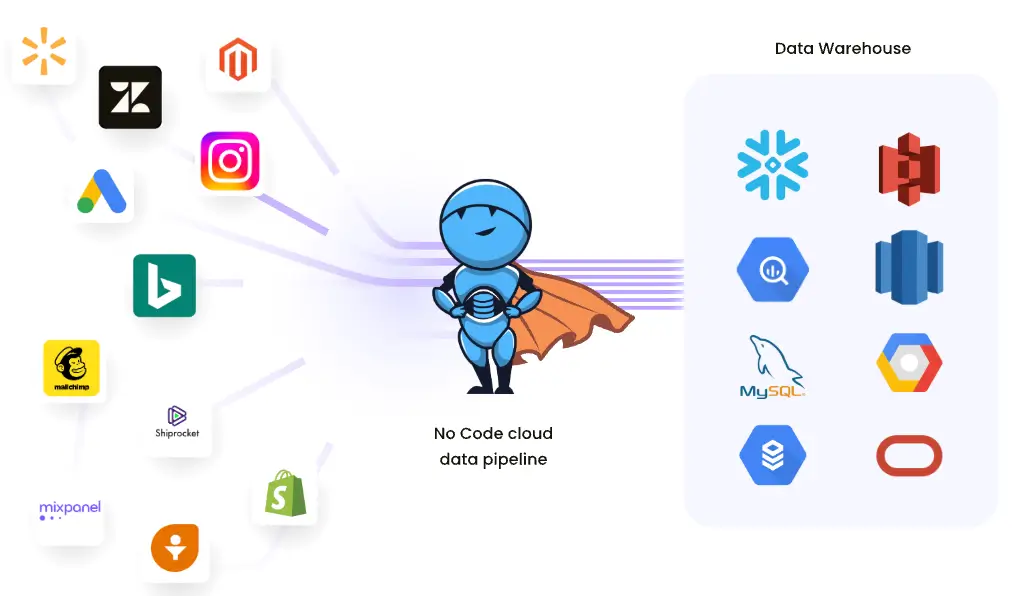
That’s why companies like BPN moved away from manual Excel workflows and adopted Saras Analytics. Their automated Tableau dashboard now ingests data nightly from Amazon, Monday.com, and ad platforms through Saras Daton (Saras’ data pipeline), providing a single, unified layer of profitability intelligence.

2. Attribution Complexity
Modern marketing rarely follows a linear path. A customer might discover your product on TikTok, click a retargeting ad on Meta, and purchase through Amazon. Which campaign gets credit for the sale?
Without accurate attribution, contribution margin analysis becomes skewed. You may cut campaigns that are driving top-of-funnel value simply because they don’t close directly.
Saras Analytics solves this by consolidating data across acquisition platforms and aligning marketing costs to actual order-level outcomes. Instead of seeing ad spend in isolation, marketers and finance teams can view contribution margin by channel, campaign, and SKU. This way, the decisions are based on full-funnel profitability.
3. Dynamic and Volatile Costs
eCommerce costs don’t stay still. Shipping rates fluctuate weekly; ad auction costs change daily, and discount campaigns distort pricing overnight. Static spreadsheets can’t keep up with that pace.
Automating contribution margin tracking ensures cost inputs remain current and reliable. Posh Peanut faced this exact challenge. They needed a reporting framework that accounted for every variable, from 3PL fees to payment processing and marketing costs across multiple channels. Saras Analytics built a tiered contribution margin model (CM1, CM2, CM3) that automatically updates each layer of profitability in real time.
This framework gave the leadership confidence in their financial visibility and allowed them to act on trends faster than before.
4. Manual Tracking and Analyst Dependency
Many eCommerce brands rely on one data analyst or freelancer to maintain complex reporting setups, which can be a fragile foundation for decision-making.
When that person leaves, the entire contribution margin model collapses. This shouldn’t be seen just as a data gap; rather, it’s an operational risk.
Saras Analytics eliminates that dependency. Its data pipeline, Saras Daton, automates data extraction, cleaning, and transformation without needing an in-house data engineer. Finance and marketing teams get reliable contribution margin dashboards without worrying about who maintains the backend. The system runs, updates, and scales automatically.
5. Lack of Unified Visibility Between Teams
Profitability is shared across finance, marketing, and operations. Yet in most organizations, these teams operate on different metrics:
- Marketers focus on ROAS.
- Finance tracks gross margin.
- Operations watch fulfillment costs.
Without a single metric tying them together, decisions often conflict. Marketing may push discounts to boost revenue while finance flags shrinking margins.
Contribution margin, when centralized and automated, becomes that shared truth.
With Saras Analytics, all teams work from the same, unified dashboard. Marketing can see the profitability of each campaign. Finance can verify that ad-driven revenue aligns with true profit. Operations can monitor fulfillment efficiency.
The Bigger Picture: Turning Data into your Highest ROI Channel
The brands leading eCommerce measure every dollar earned against the cost to acquire, fulfill, and retain the customer — and they do it by leveraging their own data.
- Founders use contribution margin to decide when to scale or pull back.
- CFOs rely on it for forecasting and investor reporting.
- Marketers use it to align spend with sustainable profit.
- Operations use it to identify efficiency gains across logistics and packaging.
Streamline your Ecommerce Contribution Margin with Saras Analytics
eCommerce contribution margin is the metric that reveals where your profitability lies. But tracking it manually across fragmented systems is slow, error-prone, and unsustainable at scale.
Saras Analytics has helped eCommerce brands like BPN, Posh Peanut, and many others transform their financial visibility. They’ve replaced spreadsheets with automated dashboards and gut-based decisions with data-driven clarity.
If your eCommerce brand is ready to shift focus from topline growth to true profitability, it’s time to see what Saras Analytics can do.
→ Discover how Saras Analytics can automate your contribution margin reporting and give your team real-time profit intelligence. Talk to our Data Consultant Today

.webp)
.svg)
%201%20(1).svg)
























.webp)

.webp)
.webp)
.webp)
.webp)












.webp)





.webp)










.webp)








.png)







.webp)




.webp)