
By the time most ecommerce teams start looking at customer segmentation seriously, they’re usually facing one of three problems:
- Retention metrics are stalling; repeat purchase rates are stuck, and LTV isn't growing.
- Campaign performance is falling flat, even with good creative.
- Teams have plenty of data, but not much insight.
The default fix is to revisit segmentation. But the issue is: most customer segmentation models are either too shallow (demographics) or too complex to activate (predictive clustering). Through this article, we will try to close that gap between insight and execution.
In this regard, the problem isn’t awareness. In fact, according to a 2024 Contentsquare report, 91% of ecommerce brands say customer segmentation is critical to personalization, but only 23% feel confident in their current approach.
What is a Customer Segmentation Model?
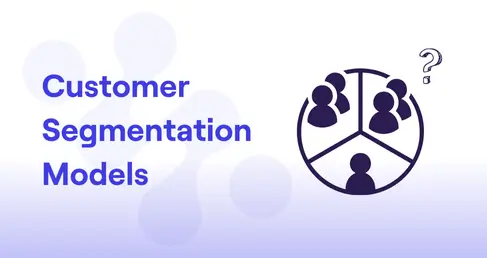
A customer segmentation model is a strategy businesses use to group their customers based on shared characteristics like demographics, behaviors, interests, or purchase history. Instead of treating all customers the same, a segmentation model helps companies understand who their audience really is and what each group values most. This makes it easier to create personalized marketing campaigns, improve customer experiences, and increase loyalty.
For example, a clothing brand might segment buyers into trendsetters, bargain hunters, and loyal repeat customers. By targeting each group differently, businesses can boost sales, build stronger relationships, and stay ahead of competitors in their market.
Relevant Read: Ecommerce Customer Segmentation
Why Customer Segmentation Models Matter
We should not see the customer segmentation model as a campaign tool. It’s a decision-making framework that helps us determine the following:
- How to group customers (by behavior, value, lifecycle, etc.)
- What to say to them (messaging, offers, timing)
- Where to focus resources (ads, product bundling, retention programs)
And it shapes how to measure growth.
For example:
- Segmenting by RFM tells you where loyalty and LTV live.
- Segmenting by lifecycle stage shows who’s slipping through the cracks.
- Segmenting by cluster analysis reveals opportunities your team didn’t even know existed.
The right model, when applied properly, doesn't just increase conversion. It also helps you re-align how teams think about customer value.
Related Read: Customer Segmentation Analysis
12 Types of Customer Segmentation Models
Let’s skip the academic definitions and get into real-world application of the different types of customer segmentation models. They are used by top DTC, Amazon-native, and multichannel ecommerce brands, and increasingly, by retention, CRM, and analytics teams working in Shopify, Klaviyo, and GA4 ecosystems. Each one solves a specific kind of problem.
1. Demographic Segmentation
This is the default one, and perhaps the most misleading one too! Here, you segment users by age, gender, household income, job title, etc.
Where it works:
- Broad top-of-funnel targeting
- Creative direction (e.g. messaging that speaks to Gen Z vs. Gen X)
Where it fails:
It assumes identity predicts intent, which breaks down fast in multi-product catalogs or blended audiences.
2. Geographic Segmentation
This segmentation is still basic, but useful in the right ops context. You group customers by region, city, or delivery availability zones.
Best use cases:
- Inventory or logistics optimization (e.g., promote local warehouse stock)
- Region-specific promos (e.g., weather-driven or holiday-timed)
3. Behavioral Segmentation
Now we’re getting closer to the actual customer signal. Here, you group users based on what they do, not who they are:
- Product categories browsed
- Abandonment behavior
- Response to discounts
- Repeat timing
Why it works:
Because purchase behavior is the clearest predictor of purchase intent. Most brands sit on this data, but few operationalize it effectively.
Rather than setting up 10 filters in your CRM to define “engaged non-buyers,” Saras iQ builds dynamic behavioral cohorts that refresh daily. If someone goes cold, they’re reclassified automatically (no manual tagging needed). That’s the difference between insight and automation.
4. Psychographic Segmentation
This is useful for premium DTC brands where identity and self-perception affect purchase. You’re grouping based on values, attitudes, or interests.
For example, if you sell sustainable apparel, you might split between “eco-motivated” buyers vs. “style-motivated” buyers, even if they purchase the same SKU.
So, what’s the challenge?
Psychographic data usually needs survey input or inferred intent (from content engagement or onsite behavior). That makes it harder to scale.
5. Value-Based Segmentation
This is among those few customer segmentation models that most teams think they’re doing, but very few are doing well. It’s not just about how much someone has spent. It’s about how much they’re likely to spend over time. That’s why LTV isn’t just a financial metric but also a segmentation anchor.
Let’s say your analytics team identifies a group of customers who bought once, spent $80, and never came back. Another group bought twice, spent $50 each time, and opened every follow-up campaign. Which group is more valuable?
It’s the second one. But if you’re only looking at raw order value, you’ll miss that entirely.
How brands use this:
- Prioritize high-LTV segments for early access, bundles, or subscription nudges
- Build suppression lists for low-margin customers who only buy discounted SKUs
- Target ad lookalikes based on high-value cohorts, not just converters
Where it breaks:
This model requires some predictive horsepower. Static rules won’t cut it. You need models that evolve as customers evolve, because someone’s value isn’t fixed.
In this case, Saras iQ automates value tiering using real-time transaction history, repeat rates, and engagement patterns. You don’t have to build LTV curves manually. You just know who matters, when, and how to treat them differently.
6. Technographic Segmentation
If you’re not factoring in how people shop, you’re missing big conversion clues. This model groups customers by device, browser, app behavior, or tech usage patterns. It’s especially useful if you’re omnichannel or mobile-heavy.
Here is a use case:
Let’s say your mobile site has a 2x higher bounce rate on Android devices running Chrome. Or your Shopify checkout drop-off spikes on Safari. That’s not a product problem. It’s a segmentation signal.
What smart teams do:
- Create device-specific landing pages or checkouts
- Serve SMS-only promos to mobile-native segments
- Exclude low-performing browser groups from paid retargeting
Technographic customer segmentation model works as a hidden lever for performance. Most teams don’t track it because it sounds too “technical.” But it’s just pattern detection and even has real ROI.
7. Needs-Based Segmentation
This model gets personal fast, and that’s what makes it powerful. In this case, you’re grouping customers by why they’re buying, not just what they’re buying. If you’re selling skincare, some buyers want quick results. Others want clean ingredients. A third group is price-sensitive but loyal if the product works. You can’t speak to all three the same way, and if you do, you lose two of them.
Where it works:
- Brands with wide SKU ranges
- Use cases that split by intent (e.g., health vs. appearance vs. convenience)
- Bundling or upsell strategies based on use-case
Why it’s hard:
You won’t always have this info unless you’re tagging journeys properly or using zero-party data (quizzes, surveys, etc.). But when done well, this model creates message-market fit that scales beautifully.
8. Lifecycle Stage Segmentation
This model is pure retention gold. It maps where someone is in their customer journey, such as new, active, dormant, loyal, or lapsed. Based on the stage, the model treats them accordingly.
For example:
- First-time buyers within 30 days = onboarding segment
- Repeat purchasers = loyalty segment
- No purchase in 90 days = churn risk segment
- Browsers but never converted = nurture segment
Why it works:
Most teams treat all customers the same. But lifecycle stages require different nudges. A lapsed buyer might respond to a personalized “we miss you” flow, while a loyalist might prefer surprise and delight offers.
Here, Saras iQ tracks lifecycle thresholds and automatically moves customers between cohorts as their behavior shifts. You’re not setting rules in 10 different tools. The system does it for you. You just act on the signals.
Related Read: Ecommerce Customer Lifetime Value
9. Firmographic Segmentation
You’ve probably seen this more in B2B, but it matters in ecommerce too, especially if you sell to professionals or SMBs. In this customer segmentation mode, you group customers by their company size, industry, or role. It’s underused, but when applied correctly, it’s extremely effective.
Use case for ecommerce:
- DTC products that overlap with professional tools (office, wellness, supplements)
- Enterprise gifting or bulk ordering
- Personalization by professional need
If you sell anything with workplace utility, it can sharpen your segmentation fast.
10. Cluster Analysis Segmentation
If you're looking for customer segmentation models that are truly data-driven, cluster analysis is the one for you. Cluster segmentation uses algorithms to find patterns in your customer data, i.e. groups that behave similarly, even if you didn’t think to group them.
It’s what happens after your business matures past personas. Instead of assuming what defines a segment, you let the data tell you.
Let's say you run a cluster analysis, and you discover that one segment only shops during seasonal drops, spends over $200 per purchase, and never opens emails, but always responds to SMS. That insight changes how you treat them entirely.
Saras iQ includes unsupervised clustering in its segmentation suite. Your team doesn’t need to run SQL or build models in Python. Just plug in transactional and engagement data, and Saras iQ surfaces high-value clusters automatically.
11. RFM Segmentation (Recency, Frequency, Monetary)
RFM Segmentation is a classic model that still performs, because it's built on behavior that maps directly to value.
You score customers based on:
- How recently they purchased
- How often they purchase
- How much they spend
Then you bucket them into segments like champions, loyal, at-risk, dormant, etc.
Why it’s so useful:
It gives you a clear map of who’s worth reactivating vs. who’s worth investing in. A dormant high spender? That’s a win-back priority. A recent low spender? Prime for upsell.
In this case, Saras iQ builds RFM segments automatically from your live data and overlays them with engagement metrics. So, you’re not just seeing who spent. Instead, you’re also seeing who still cares.
12. Longevity Segmentation
This one’s about time-based loyalty. You group users by how long they’ve been with your brand, like 3 months, 6 months, 1 year, etc. Besides helping you know how much they’ve spent, this model also tells you how long they’ve stuck around and what behaviors come with that.
Here is an example: A customer who’s been with you 18 months but hasn’t purchased in the last 90 days? That’s churn risk from a previously loyal group. A customer who’s brand new but visited the site 5 times this week? That’s high intent and deserves fast onboarding.
A few use cases:
- Anniversary rewards
- Early access for long-term loyalists
- Segmenting NPS or reviews by tenure
How to Choose the Right Customer Segmentation Model
At this point, it’s clear that segmentation models are majorly about decisions. The question now is: Which model makes sense for your team, your data, and your business goals?
The answer isn’t one-size-fits-all. You don’t need all 12 models. In fact, trying to use them all at once usually leads to more noise, not clarity. So, here’s how to make smart choices based on where your business is today, and where it’s trying to go.
Start With Your Primary Objective
Most brands land in one of three camps:
- You want to increase retention (LTV is stuck, churn is creeping up).
- You want to personalize better (campaigns feel generic, response rates are flat).
- You want to optimize acquisition and AOV (paid CAC is rising, margins are tight).
That goal tells you where to start.
| Goal | Start with these Models |
|---|---|
| Retention | Lifecycle, RFM, Longevity, Value-Based |
| Personalization | Behavioral, Needs-Based, Cluster |
| AOV & CAC Optimization | Value-Based, Technographic, Firmographic |
If you're early-stage and still building your customer base, lean on behavioral + lifecycle. They’re the most direct signals you can act on without requiring years of history.
If you're more mature, and you’ve got repeat buyers and multi-SKU behavior, bring in cluster analysis or value-based segmentation to find patterns in performance you’re not seeing.
Audit Your Data (But Don’t Wait for “Perfect”)
One reason segmentation fails is because teams think they need to fix all their data first. Yes, clean data helps, but segmentation doesn’t require perfect records. It requires usable signals.
Here’s what you need to get started with most models:
- Behavioral data → Product views, add-to-cart, purchase history
- Transactional data → Order frequency, average spend, order time stamps
- Engagement data → Email clicks, SMS opt-ins, reviews
- Contextual data → Device, location, traffic source
You likely already have most of this inside Shopify, Klaviyo, Google Analytics, or Amazon order exports. The key is connecting those dots into one place.
For example Saras iQ consolidates Shopify, Amazon, and GA4 data into unified customer profiles. That’s what makes its segmentation engine so valuable. You don’t have to pipe everything into a CDP first. You just connect sources, and Saras iQ builds segments that update every day.
Choose a Model that Helps You Solve a Problem
A mistake many teams make is starting with the model, not the outcome.
For example:
- If your win-back flows aren't converting, don’t guess. Instead, run lifecycle segmentation and measure conversion by stage. Find where the drop-off happens.
- If you’re unsure who to target with your next discount, segment by RFM. Don’t waste offers on loyal full-price buyers.
- If your LTV is skewed by a few VIPs, use cluster analysis to find their behavioral lookalikes and build for scale.
Real-World Examples: How eCommerce Brands Are Using These Models
These stories precisely show how powerful segmentation becomes when it's built for action.
Example 1: Faherty Achieves $1.1M Incremental Revenue (+46% YoY Growth)
Faherty, a leading omnichannel apparel brand, faced underperforming segmentation and wasted ad spend. Saras iQ enabled them to build micro‑segment cohorts with CLTV insights, refine audiences for direct mail and digital ads, and run incrementality tests on catalogs and campaign flows. This strategic targeting drove $1.1 million in additional revenue, boosted return on ad spend by 55%, and even reduced their ad spend by 5%. Read the Case Study Now.
Example 2: True Classic Saves 1,000+ Hours and Gains Real-Time Retention Insights
True Classic was struggling under a fractured tech stack. 40+ systems, disconnected reporting, and no unified way to segment customers. With Saras Daton and Saras iQ, they built daily customer cohorts, unified their data, and enabled retention, LTV, and segmentation insights at scale. The result: over 1,000 hours saved annually, better retention visibility, and faster decision-making across marketing, operations, and finance. Read the full Case Study Now.
Challenges in Building Effective Customer Segmentation, Models
Most ecommerce teams don’t fail at segmentation because they lack creativity. They fail because their tools, data, or workflows get in the way. Here are the common blockers:
1. Data Lives in Too Many Tools
Shopify holds transactions. Klaviyo holds engagement. Amazon holds half your revenue, but none of the customer context. This fragmentation makes building segments a manual, error-prone process.
So, how to fix it? Saras iQ merges this data automatically, no SQL needed. You get clean, unified profiles that update daily. That’s how segments stay alive, not stale.
2. Static Segments Become Obsolete
You create a “high-intent” segment… and never update it. Someone buys, churns, or disengages, but stays in the same flow. You can fix this through dynamic segmentation, as it updates the data every day based on behavior. Saras iQ does this natively, with no exports, or no stale lists.
3. Teams Don’t Trust the Segments
If no one knows where a segment came from, or why someone’s in it, it won’t get used. This is where black-box CDPs often fall short. In this case, every segment in Saras iQ is transparent: you can see the logic, adjust thresholds, and tie segments to real business metrics (like CLV, churn risk, or cohort retention). That builds cross-functional trust and usage.
4. Segmentation Isn’t Tied to Action
You’ve got segments. But they don’t trigger anything. They sit in dashboards while campaigns keep running the same way. However, every Saras iQ segment can be synced directly into Klaviyo, Meta, Google Ads, or your ESP of choice. That’s how segmentation goes from insight to execution.
Build Smarter Segmentation Models with Saras iQ
Most ecommerce teams aren’t struggling with segmentation because they lack ideas. They’re struggling because building and maintaining segments is manual, scattered, and fragile. The models we’ve discussed? They’re effective, but only if they can live inside your workflows.
This is where Saras iQ makes the difference. Rather than being just another dashboard, it acts as the connective tissue that turns segmentation from a marketing theory into an operational advantage.
What Saras iQ Actually Does
Saras iQ is built for ecommerce teams working in Shopify, Amazon, and DTC ecosystems who need to act on segmentation and not just report on it. It solves the most common and painful issues around segmentation in four very specific ways:
1. Unified Customer View Across Channels
If your buyer exists in Amazon, Shopify, and Klaviyo, how do you track them?
Most teams can’t!
Amazon buyers are invisible once they check out. Shopify buyers get tracked in Klaviyo, but good luck stitching their behavior together when they also shop at your Amazon store. The result? Teams are blind to full-funnel behavior, and segmentation breaks before it starts.
Saras iQ fixes this by building one customer profile across platforms. You get transactional and behavioral data from Amazon, Shopify, and GA4 in one place. That’s the base layer for accurate segmentation, and it doesn’t require a CDP or IT ticket to pull off.
2. Dynamic Cohorts That Update Daily
A lot of teams build segments like they’re creating lists. They set it and forget it, and later they wonder why results degrade. But Saras iQ takes a different approach. Its segmentation engine is cohort-based and dynamic. That means:
- Your “high intent” segment only includes users who are acting like it, right now.
- Lapsed buyers are automatically reclassified the moment they meet a defined threshold.
- A loyalist who suddenly stops engaging gets flagged before they churn, not after.
You define the logic once. Saras handles the rest. And every segment stays accurate without manual updates.
3. Prebuilt Models for Fast Activation
Building segmentation models from scratch takes time. You’ve got priorities, retention flows, Black Friday planning, LTV reporting. You don’t need to start from zero.
Saras iQ gives you plug-and-play segmentation templates, including:
- RFM (Recency, Frequency, Monetary) scoring
- Lifecycle journey mapping (new, repeat, loyal, churn risk)
- Behavioral clusters (discount-driven, new product explorers, high-AOV shoppers)
- Value-based tiers (based on dynamic LTV and purchase frequency)
4. Instant Sync With Your Tools
Saras iQ doesn’t live in isolation. It pushes your segments into the places you actually use, such as Klaviyo, Meta Ads, Google Ads, ESPs, and CRM tools. This way, campaigns can trigger based on daily-refreshed behavior, and not just static rules.
If you want to launch an email flow for high-value shoppers who haven’t purchased in 30 days, here is what you can do:
- Segment builds automatically in Saras
- Pushes to Klaviyo with one click
- Flow starts running immediately
There’s no CSV export. No “check with data.” Just action.
Final Thoughts
Customer segmentation models aren’t just spreadsheet exercises. And it’s not a once-a-quarter analysis. It’s the foundation for smarter marketing, better product decisions, and long-term profitability. But only if the models you choose can actually be executed by the teams who need them.
That’s the gap Saras iQ is closing:
- From data → to insight
- From insight → to action
- From action → to results you can see in revenue, repeat rate, and retention
Want to see Saras iQ in action? Talk to our data consultants today.
.webp)
.svg)
%201%20(1).svg)






.jpg)
%20Statistics%20in%202026.jpg)


%20Software%20for%20DTC%20Brands%20in%202026.png)

%20Setup%20Guide%20for%20Ecommerce%20Finance%20Team.png)





.webp)
.webp)
.webp)
.webp)
.webp)