.webp)
In today’s competitive landscape, customer retention has become a critical focus for businesses. Retaining a customer costs far less than acquiring a new one, and even a 5% increase in retention can boost profits by up to 95%. Yet many brands still struggle to understand why some customers return while others drop off. A key reason is fragmented data across multiple tools, making it difficult to form a unified, reliable view of customer behavior. Progressing along the data maturity journey, i.e. from scattered systems to unified insights has become essential for growth.
One powerful way to achieve this is cohort analysis, which groups customers by shared characteristics or behaviors and tracks them over time. Companies using cohort-based segmentation see 33% more spending per order from retained customers. But to unlock this value, brands need feature-rich analytics like flexible segmentation, real-time retention tracking, and predictive AI that turn raw data into growth-ready insights.
In this blog, we’ll explore cohort analysis, why it matters, and how to choose the best software to optimize retention and revenue in 2026.
What is Cohort Analysis?
Cohort analysis is a method of analyzing data by grouping users based on shared characteristics or behaviors during a specific time period. In the context of eCommerce, it’s often used to track and measure the behavior of groups of customers over time to identify patterns, track retention, and optimize business strategies.
For example, if you run an online clothing store, you might group customers based on when they first made a purchase or during a special promotion. From there, you can analyze how these cohorts behave after they make a purchase—whether they return to buy again, what products they’re most interested in, and how their lifetime value evolves.
Unlike traditional analytics, which focuses on broad aggregate data, cohort analysis zooms in on smaller segments, allowing businesses to gain a deeper understanding of their users and make more informed decisions.
Now that we’ve laid out the basics, let’s dive into why cohort analysis is a game-changer for modern businesses.
%20(1).avif)
Why Cohort Analysis is Important for Your Business
Understanding customer behavior is key to making informed business decisions. Cohort analysis provides businesses with valuable insights into customer retention, segmentation, and revenue growth, enabling more targeted strategies that drive long-term success.
1. Retention:
By tracking the behavior of specific groups over time, cohort analysis highlights which segments of your customers are most likely to churn and which are most loyal. You can use this information to create retention strategies tailored to specific cohorts, such as offering special discounts to those who haven’t returned in a while.
2. Customer Segmentation:
Instead of looking at customers as a monolithic group, cohort analysis breaks them down into segments based on behaviors. This allows you to identify the most profitable segments and cater to their specific needs, enhancing your ability to convert visitors into loyal customers.
3. Revenue Growth:
Understanding when and why customers return allows you to craft better product recommendations, promotional campaigns, and customer support strategies. By optimizing the customer journey for each cohort, you can drive more revenue over time.
For instance, tracking when shoppers tend to drop off after their initial purchase allows you to send targeted retention campaigns to that cohort, increasing repeat purchases and maximizing customer lifetime value.
Types of Cohort Analysis You Can Perform
Cohort analysis is a powerful tool to segment users based on shared characteristics or behaviors over time. By analyzing these segments, businesses can identify trends and make informed decisions. Depending on the business goals, there are different types of cohort analysis that provide unique insights into customer behavior.
1. Acquisition Cohorts
Acquisition cohort analysis groups users based on when they were first acquired, such as when they signed up or made their first purchase. This allows businesses to evaluate how effective specific marketing efforts are in attracting long-term customers.
For example, you could track users who joined during a Black Friday sale and compare their long-term engagement with those who signed up at other times of the year. By analyzing these groups, you can understand the effectiveness of seasonal promotions and how they influence customer retention.
2. Behavioral Cohorts
Behavioral cohort analysis groups users based on specific actions they take on your website or app, such as making a purchase, clicking on a specific link, or engaging with a feature. This helps businesses understand how certain behaviors impact customer retention and conversions.
For instance, you could create a cohort of users who clicked on product recommendations and track their purchasing behavior. If this cohort tends to make higher-value purchases, you can use this insight to optimize your product recommendation system for higher conversions.
3. Time-Based Cohorts
Time-based cohort analysis groups users based on when they perform a specific action, such as signing up or making their first purchase. This allows businesses to track how user behavior changes over time and identify trends related to seasonality or lifecycle stages.
For example, users who sign up in January may exhibit different purchasing behavior from those who sign up in July. This insight can help you understand seasonal effects and plan targeted campaigns for different times of the year.

How to Perform Cohort Analysis (Step-by-Step)
Cohort analysis is a powerful way to understand customer behavior and drive smarter business decisions. In this section, we’ll walk through a clear, step-by-step process for performing cohort analysis effectively.
1. Define Your Goal
Start by defining the goal of your analysis. Are you focusing on retention, purchase frequency, or feature adoption? A clear goal will guide the structure of your cohorts and help you determine what data to track.
2. Group Your Users
Next, group your users into cohorts based on your goal. For example, you could segment users by sign-up date or first purchase date if you’re analyzing the impact of a specific campaign or promotion. This step helps you narrow down the data to relevant user groups.
3. Choose Metrics
Choose metrics that align with your business goals, such as retention rates, purchase frequency, or customer lifetime value. For example, if your goal is to track retention, you might measure how often users from a specific cohort return to make a second purchase.
4. Visualize Data
Visualize the data using charts, graphs, or tables to identify patterns and trends across cohorts. Visual representations help you spot which cohorts are performing well and where adjustments may be needed.
5. Interpret Results
Interpret the results to uncover insights. Look for patterns such as which cohorts have higher retention or better engagement. Understanding these trends helps you make data-driven decisions to optimize your strategies.
6. Automate Recurring Analysis
For ongoing analysis, automate the process with tools that generate recurring reports. This saves time, especially as your business scales, and ensures you’re always working with up-to-date data to make informed decisions.
A cohort analysis software can simplify the execution and interpretation of this process, providing actionable insights automatically. With the right tool, you can streamline cohort analysis, reduce manual effort, and gain deeper insights that drive smarter, faster business decisions.
Why Your Business Needs a Cohort Analysis Software
Understanding your customers and making data-driven decisions is crucial for business success, but manual cohort analysis can be overwhelming and prone to errors. This is often the first stage of a brand’s data maturity journey; fragmented tools creating inconsistent, incomplete insights. Cohort analysis software helps businesses move to the next stage: unified, standardized insights that not only guide today’s decisions but also lay the foundation for AI-driven predictive analytics
Cohort analysis software simplifies the process, offering automated insights and real-time data to help you make smarter, faster decisions. In fact, 93% of businesses report improved customer retention after adopting analytics software, with 44% seeing retention jump by up to 29%. Additionally, companies using AI-powered tools are 83% more likely to exceed their sales goals.
So, why do businesses need cohort analysis software? Let’s dive into the common challenges faced in manual analysis and how software can solve them, providing you with clear, actionable insights.
Breaking Data Silos
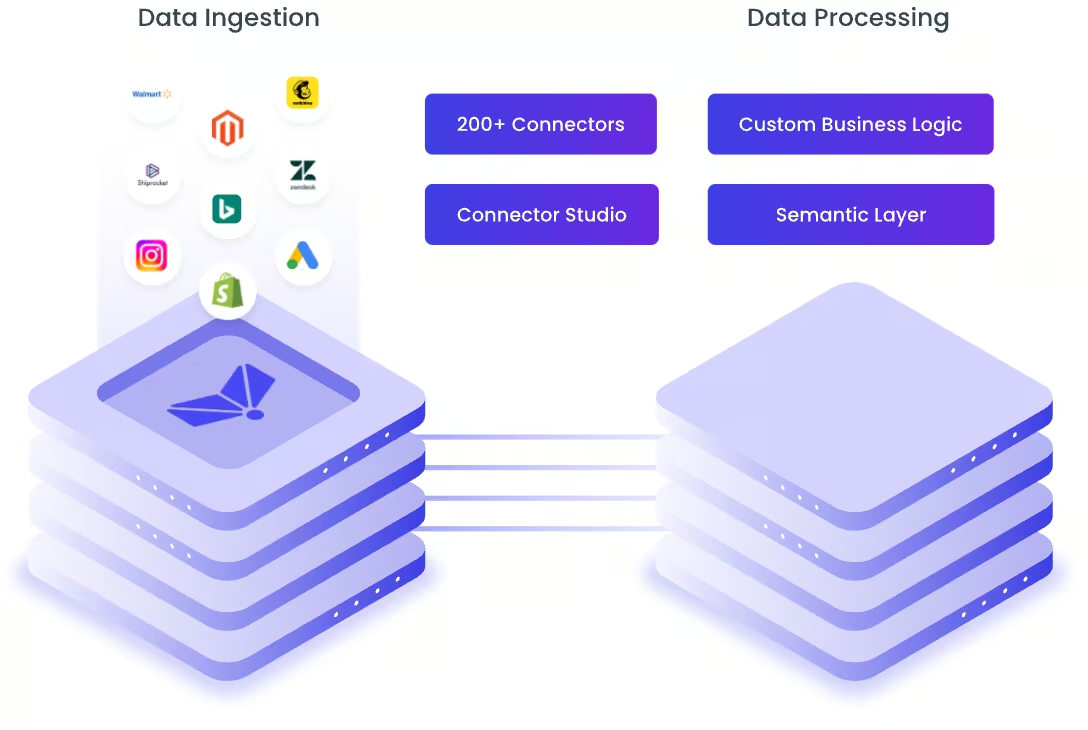
Manual cohort analysis typically involves pulling data from different sources and systems, leading to data silos. This makes it difficult to get a complete and unified view of customer behavior, resulting in fragmented insights. Cohort analysis software integrates data from various platforms into one unified system, providing a single source of truth for your customer behavior. This ensures that all teams have consistent, reliable, and actionable insights that help in aligning business strategies.
Achieving Consistent, Actionable Insights
When cohort analysis is performed manually, it’s prone to inconsistent insights. Different teams may use different tools or methods for analysis, which can result in variations in cohort definitions and data interpretations. Cohort analysis software standardizes the process, ensuring consistency across all levels. By providing accurate, real-time data, it helps ensure that all teams are aligned with the same insights and can make data-driven decisions confidently.
Real-Time Analysis for Immediate Action
Another limitation of manual cohort analysis is the lack of real-time data. Businesses often rely on outdated data, which can delay decision-making and hinder the ability to act quickly. Cohort analysis software automates data collection and provides up-to-date, real-time insights. This allows businesses to react swiftly to changes in customer behavior, optimize marketing efforts, and implement retention strategies in a timely manner. With a real-time view, businesses can act before issues like churn become a bigger concern.
Churn Prevention
Churn is a significant challenge for any business, but cohort analysis software helps you track and identify early signs of churn. By analyzing cohorts over time, you can spot patterns of disengagement and take proactive steps to retain at-risk customers. For example, if you notice that a specific cohort’s engagement levels are dropping, you can target them with personalized offers or communication to keep them engaged and prevent churn from occurring.
Seasonal Insights
Customer behavior can change drastically during different seasons or periods of high demand. However, manual cohort analysis can often miss these trends. Cohort analysis software helps you track seasonal patterns, allowing you to see how different cohorts behave during specific times of the year. For example, you can compare how customers acquired during the holiday season perform versus those acquired in the summer. This helps you optimize inventory, marketing, and promotions for peak seasons and plan more effectively.
Customer Lifetime Value Precision
Understanding Customer Lifetime Value (CLV) is essential for long-term business success, but accurately measuring it can be difficult with manual methods. Cohort analysis software provides precise tracking of CLV for different cohorts, allowing you to see how each group’s behavior impacts long-term revenue. With this insight, businesses can focus on high-value customers, tailor their marketing efforts, and allocate resources more effectively to maximize profitability.
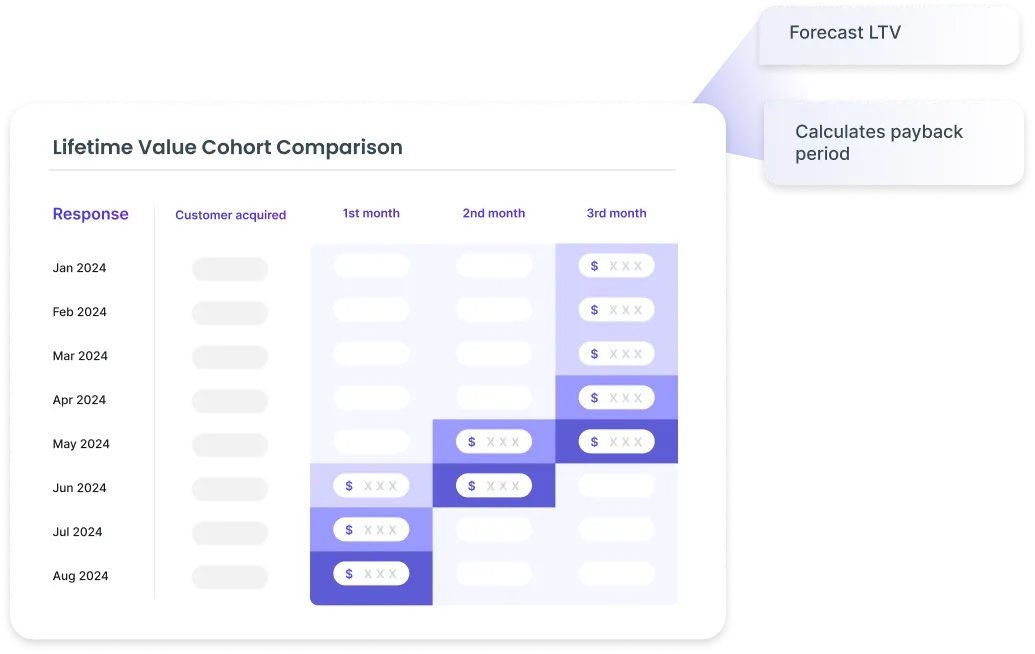
By overcoming the limitations of manual cohort analysis, cohort analysis software provides businesses with real-time, unified insights into customer behavior. With features like data integration, real-time tracking, and CLV precision, Cohort retention tools streamline the process and allow businesses to make data-driven decisions that lead to improved retention, churn prevention, and long-term growth.
Key Features to Look for in a Cohort Analysis Software
When selecting cohort analysis software, it’s crucial to focus on features that will help you efficiently track, analyze, and act on customer behavior. The right software should provide the tools necessary to make data-driven decisions that drive growth and retention. Here are the key features to consider:
Flexible Cohort Creation and Segmentation
Look for software that allows you to create custom cohorts based on a variety of criteria such as acquisition date, behavior, or product engagement. This flexibility helps you target specific customer groups and analyze behavior patterns in a way that aligns with your business goals, allowing for more personalized marketing and retention strategies.
Customizable Cohort Filters
Customizable filters enable you to drill down into specific customer segments, such as high-value users or first-time purchasers. This feature lets you refine your analysis and focus on the cohorts that matter most to your objectives, making it easier to identify trends and optimize your strategy for maximum impact.
Visualization Dashboards
A good cohort analysis tool should offer intuitive dashboards that visualize key metrics and trends. Visualization simplifies data interpretation, allowing you to quickly identify patterns, track cohort performance over time, and share insights across teams, making decision-making faster and more collaborative.
Predictive AI
AI-driven insights can help predict future trends based on historical data, such as identifying which cohorts are likely to churn or which features will drive higher engagement. This feature helps businesses make proactive decisions, focusing on opportunities that drive the highest potential for growth.
Advanced Retention Analysis
Retention tracking is crucial for understanding how well your cohorts are performing over time. Cohort analysis software should offer tools to track customer retention rates, helping you identify areas of strength and weakness in your customer journey. This enables you to implement targeted strategies to improve long-term loyalty.
Integration and Data Management
Effective cohort analysis software should seamlessly integrate with your existing tech stack, pulling data from sources like CRM, email marketing, or eCommerce platforms. By consolidating all your customer data in one place, it helps reduce manual work, ensures consistency, and gives you a more complete view of customer behavior.
These features ensure that cohort analysis software not only simplifies the process but also provides deep, actionable insights that can drive smarter decisions and fuel business growth.
9 Best Cohort Analysis Software in 2026
Choosing the right cohort analysis software is essential for businesses looking to optimize customer behavior insights and improve decision-making. In 2026, there are several powerful tools available, each offering unique features to help businesses track and analyze customer cohorts effectively. Here, we’ll highlight the top 9 cohort analysis software options to help you find the best fit for your business needs.
| Software | Cohort Segmentation | Retention Tracking | Behavioral Analysis | AI/ML Insights | Visualization Tools | Number of Integrations | Free Plan |
|---|---|---|---|---|---|---|---|
| Saras iQ | Advanced, omnichannel | Yes | Yes | Yes | Dashboards, LTV | >200 | No |
| Amplitude | Dynamic, predictive | Yes | Yes | Yes (Growth+) | Journey Maps, Funnels | 50+ | Yes |
| Heap | Instant, custom | Yes | Yes | No | Heatmaps, Session Replay | 20+ | Yes |
| Google Analytics 4 | Time/event-based | Yes | Yes | No | Tables, Graphs | 1500+ (via Make/Zapier) | Yes |
| Mixpanel | Granular, saved | Yes | Yes | No | Reports, Boards | 50+ | Yes |
| Kissmetrics | Event, user-level | Yes | Yes | No | Funnels, Revenue Attrib | 10+ | No |
| Userpilot | Company/user-based | Yes | Yes | No | Cohort tables, Trends | 10+ | No |
| Julius AI | No-code, flexible | Yes | Yes | Yes | Auto-visual, Conversational | 15+ | Yes |
| Matomo | Privacy, custom | Yes | Yes | No | Graphs, Tables | 100+ (plugins/CMS) | Yes |
Top 9 Cohort Analysis Software in 2026
Saras iQ Best for Omnichannel eCommerce brands
Amplitude Best for Product & growth teams
Heap Best For Product analytics in real-time
Google Analytics 4 Best for Website & app traffic analytics
Mixpanel Best for In-depth product analytics
Kissmetrics Best for Customer journey tracking
Userpilot Best for User onboarding, engagement
Julius AI Best for Data science, SMEs, no-code
Matomo Best for Privacy-focused businesses
After reviewing the key features and benefits, let’s dive deeper into each of these cohort analysis software options to understand how they stand out and which is best suited for your business.
1. Saras iQ
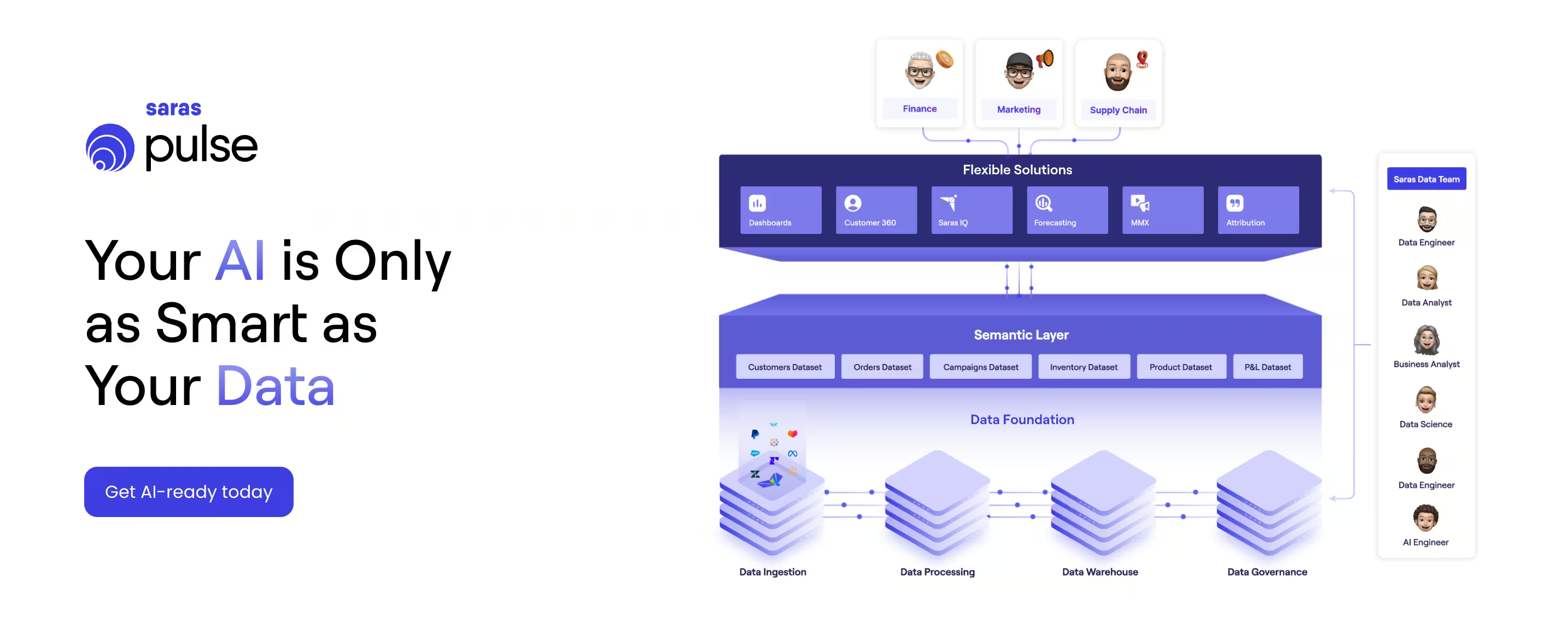
Saras iQ is a comprehensive cohort analysis software built specifically for omnichannel brands, enterprise retailers, and data-forward DTC companies. Designed to scale with high-volume operations, Saras iQ offers real-time, fully customizable dashboards that provide deep insights into customer behavior, retention, and cohort performance across all channels.
Its backbone, Saras Daton, is an enterprise-grade ELT engine that supports over 200 connectors and 5,000+ APIs, ensuring seamless data integration from platforms like Shopify, Amazon, Meta Ads, Klaviyo, GA4, and more.
Unlike generic BI tools or lightweight analytics solutions, Saras iQ is built to go deep, providing advanced cohort segmentation, retention tracking, behavioral analysis, and AI-driven predictive insights. Trusted by industry leaders such as AG1, Faherty, True Classic, and Hexclad, Saras iQ delivers accurate, granular, and actionable insights to drive smarter customer engagement, retention, and growth—all without needing engineering support for every new request.
Key Features:
1. Advanced, Omnichannel Cohort Segmentation: Segment customers based on various behaviors, including purchase patterns, acquisition channels, and engagement.
2. Retention Tracking: Monitor cohort retention rates over time, helping businesses identify patterns and take proactive retention actions.
3. Behavioral Analysis: Understand how different behaviors influence retention, churn, and purchases, allowing for targeted strategies.
4. AI/ML Insights: Use AI-driven insights to predict customer behavior, forecast churn, and personalize marketing efforts.
5. Visualization Tools: Access intuitive dashboards and lifetime value (LTV) charts for easy data interpretation and decision-making.
6. 200+ Integrations: Integrates seamlessly with major eCommerce platforms, CRMs, and marketing tools for a comprehensive view of customer behavior.
Pros:
- Powerful AI and machine learning capabilities for predictive insights.
- Wide integration with over 200 platforms for a unified view.
- Easy-to-use interface with advanced cohort segmentation and retention tracking.
Cons
- May be too advanced for early-stage brands with minimal data complexity
- Mobile dashboard experience currently under beta testing
Pricing:
Starts at $300/month for the Growth plan; pricing scales based on data volume, features, and support needs. Custom enterprise packages are available for larger brands with advanced requirements.
Customer Ratings
4.8/5 on G2 (as of May 2025)
.avif)
2. Amplitude
Amplitude is a leading product analytics platform designed to provide deep insights into user behavior and help businesses drive product growth. With its predictive cohort segmentation, Amplitude enables teams to track customer interactions, identify trends, and optimize user experiences. It’s particularly useful for companies that need to understand how customer actions impact retention, conversions, and feature adoption, making it ideal for product and marketing teams.
Key Features:
- Predictive cohort segmentation for proactive user behavior forecasting.
- Comprehensive event tracking for detailed analysis of user actions.
- Funnel analysis to identify drop-off points in the customer journey.
Pros:
- Powerful predictive analytics and cohort segmentation.
- Ideal for product teams and user engagement optimization.
- Real-time, actionable insights.
Cons:
- Can be expensive for smaller businesses, especially for advanced features.
- Limited to Growth+ plans for full AI/ML insights.
Pricing:
Amplitude offers a free plan with limited features. Paid plans start at $49/month for the Essentials plan, with custom plans available for larger businesses or more advanced needs.
3. Heap
Heap is an auto-capture analytics tool that eliminates the need for manual tracking and event tagging, making it a highly efficient tool for cohort analysis. It automatically collects data across all touchpoints, enabling businesses to segment users based on behavior and track retention with minimal effort. This feature makes Heap ideal for teams that want deep insights into user interactions without spending time on manual configuration.
Key Features:
- Auto-Capture Analytics: Capture every user interaction automatically, no manual event tracking required.
- Retention Tracking: Monitor customer retention across cohorts, identifying when users drop off or re-engage.
- Behavioral Cohort Segmentation: Group users based on specific actions or attributes to analyze engagement and churn.
- Real-Time Visualization: Includes heatmaps and session replay tools to understand how users interact with your site.
- Cross-Platform Integration: Integrates with platforms like Shopify, Salesforce, and Google Analytics for comprehensive insights.
Pros:
- Automatic data collection saves time and ensures no key interactions are missed.
- Real-time, actionable insights for quick decision-making.
- User-friendly interface for teams with minimal technical expertise.
- Powerful cohort analysis with minimal setup.
- Great for small to mid-sized businesses with growing data needs.
Cons:
- Free plan has limited features for more advanced cohort analysis.
- Higher data volumes can increase costs significantly.
- Some users may need technical support for advanced features.
Pricing:
Heap offers custom pricing based on your business's needs, and they provide a free plan with limited features.
4. Google Analytics 4 (GA4)
Google Analytics 4 (GA4) is the next-generation analytics solution from Google that provides powerful tools for tracking user behavior across websites and apps. GA4’s cohort analysis capabilities are built on event-based tracking, enabling businesses to measure customer retention and track the success of marketing campaigns over time. It’s an ideal choice for companies looking for a free, robust tool with seamless integration into the Google ecosystem.
Key Features:
- Event-Based Cohort Segmentation: Segment users based on specific actions or time-based events to analyze behaviors and trends.
- Funnel & Path Analysis: Track customer journeys and spot drop-off points in the conversion process.
- Cross-Platform Tracking: Track users across both web and mobile apps for a comprehensive view of their behavior.
- Custom Reporting: Build customized reports that focus on your most relevant KPIs and metrics.
- Enhanced Integration: Seamless connection to Google Ads, BigQuery, and other Google services for powerful data analysis.
Pros:
- Free plan with a comprehensive suite of analytics tools.
- Easy integration with Google Ads and other Google products.
- Scalable and suitable for businesses of all sizes.
- Powerful event-based cohort analysis and detailed reporting.
- Cross-platform tracking for a complete view of customer behavior.
Cons:
- Limited cohort analysis features without custom setup.
- Learning curve for users unfamiliar with Google Analytics.
- Manual configuration needed for eCommerce tracking and post-purchase insights.
Pricing:
Free; GA4 360 (Enterprise version) starts at $50,000/year.
5. Mixpanel
Mixpanel is a product analytics platform that excels at granular cohort segmentation and behavioral analysis. It is designed for businesses that need deep insights into how users engage with their product, from feature adoption to user retention. Mixpanel is particularly useful for product teams looking to track user journeys and optimize product features based on data-driven insights.
Key Features:
- Granular Cohort Segmentation: Create cohorts based on specific actions or events and track their behavior over time.
- Real-Time Event Tracking: Track every user action for detailed, real-time analytics.
- Retention Analysis: Measure how often users return to your product, identifying trends and churn risks.
- Funnel Analysis: Visualize conversion paths and identify where users drop off.
- Advanced Reporting: Generate custom reports to track KPIs and analyze user behavior.
Pros:
- Highly customizable cohort segmentation for detailed insights.
- Excellent for tracking user engagement in digital products.
- Real-time data helps identify issues and opportunities quickly.
- Powerful A/B testing and optimization tools.
- Detailed retention tracking and user behavior analysis.
Cons:
- Expensive for small businesses, especially in the higher tiers.
- Technical setup may require additional resources for advanced features.
- Limited integrations with some eCommerce platforms.
Pricing:
Mixpanel offers a free plan for up to 1M monthly events, with the Growth plan starting at $0 and $0.28 per 1K events after that; custom pricing is available for enterprise-level needs.
6. Kissmetrics
Kissmetrics is a behavioral analytics platform focused on tracking individual user actions and understanding customer behavior at a granular level. With strong cohort segmentation and retention tracking features, it’s ideal for marketers who want to optimize their customer acquisition and retention strategies, driving better long-term value from each user.
Key Features:
- Event & User-Level Cohort Segmentation: Segment customers based on actions like purchases or sign-ups.
- Retention Tracking: Track customer retention and engagement over time.
- Revenue Attribution: Understand how different marketing efforts contribute to revenue generation.
- Funnel Analysis: Analyze the customer journey to find drop-off points and optimize conversions.
- Customer Lifetime Value (CLV) Tracking: Measure and predict the long-term value of different cohorts.
Pros:
- User-level tracking and detailed cohort segmentation.
- Strong retention and revenue attribution tools.
- Comprehensive funnel analysis and CLV insights.
- Ideal for customer acquisition and marketing teams.
Cons:
- Difficult to set up for those new to analytics platforms.
- Limited integrations with certain eCommerce platforms.
- Can be expensive for smaller teams.
Pricing:
Kissmetrics offers the Bronze plan at $25.99/month for small-sized teams and the Silver plan at $299/month for medium-sized teams. For high-traffic businesses, custom pricing is available based on needs.
7. Userpilot
Userpilot is a product adoption platform focused on improving user onboarding and feature adoption. By integrating cohort analysis, it enables businesses to track customer engagement and optimize the product experience. It’s particularly useful for SaaS businesses that want to reduce churn and improve user retention.
Key Features:
- Behavioral Cohort Segmentation: Segment users based on behavior such as feature usage or onboarding progress.
- Retention Tracking: Track user retention and understand why customers engage or churn.
- Product Adoption Tools: Create in-app product tours, tooltips, and other engagement features.
- User Feedback Collection: Gather in-app feedback to improve the user experience.
- Real-Time Analytics: Access up-to-date data on how users interact with the product.
Pros:
- Excellent for SaaS businesses looking to improve user engagement.
- Real-time cohort tracking and feature adoption tools.
- In-app engagement tools like product tours and tooltips.
- Easy-to-use with a user-friendly interface.
Cons:
- Primarily suited for SaaS, limiting use for other business types.
- Pricing may be high for small businesses.
Pricing:
Userpilot offers the Starter plan starting from $299/month for small teams, with the Growth plan starting from $799/month for growing teams. Custom pricing is available for larger teams and enterprises.
8. Julius AI
Julius AI is a no-code, AI-powered cohort analysis platform that offers businesses powerful insights into customer behavior, predicting trends and forecasting customer actions. With a focus on predictive analytics, Julius AI helps businesses make proactive decisions based on customer data.
Key Features:
- No-Code Cohort Segmentation: Create segments without requiring coding knowledge.
- AI-Powered Predictive Insights: Forecast customer behavior, churn, and engagement.
- Real-Time Visualizations: Automatically generate visual insights and reports.
- Custom Reporting: Tailor reports to your business’s specific needs.
- Integrations: Connects with CRM and marketing platforms for seamless data flow.
Pros:
- AI-driven insights for predictive analytics and trend forecasting.
- Easy to use with a no-code setup.
- Real-time visualizations and automated reporting.
- Excellent for businesses seeking proactive analytics.
Cons:
- Limited integrations compared to other platforms.
- Best suited for businesses with advanced AI needs.
Pricing:
Julius AI offers a Free plan for basic features. Paid plans start at $37/month for the Pro plan (billed annually at $450/year), and Enterprise plans start at $5,000/month with custom pricing.
9. Matomo
Matomo is an open-source analytics platform that provides businesses with full data ownership and privacy while offering powerful cohort analysis features. Matomo is ideal for businesses focused on privacy, ensuring that customer data is fully controlled and secure.
Key Features:
- Custom Cohort Segmentation: Segment users based on behavior and demographics.
- Retention Tracking: Track how different cohorts behave over time.
- Heatmaps & Session Recordings: Understand user interaction through heatmaps and session recordings.
- Custom Reports: Build reports based on the metrics that matter most.
- Comprehensive Integrations: Integrates with over 100 platforms via plugins.
Pros:
- Full data ownership and privacy control.
- Highly customizable for specific business needs.
- Great for businesses with a focus on data security and privacy.
Cons:
- Requires more technical setup than other platforms.
- Less intuitive for beginners compared to other cohort analysis tools.
Pricing:
Cloud: The Business plan starts at •22/month (approx. $24), which includes up to 50,000 hits per month. For higher traffic, custom pricing is available.
On-Premise: Free for unlimited hits (requires technical knowledge and server setup). Paid support options are available.
How to Choose the Right Cohort Analysis Software for Your Business
Choosing the right cohort analysis software is crucial for gaining insights into user behavior and driving business growth. The ideal tool will help you track customer patterns, optimize retention, and improve decision-making. However, selecting the best software depends on several key factors:
1. Business Size
The size of your business plays a significant role in determining the type of cohort analysis software you need. Larger organizations with more complex data needs may require robust tools that offer advanced analytics, real-time insights, and scalability. On the other hand, smaller businesses or startups may benefit from simpler tools with essential features that are easy to implement and affordable.
2. Data Volume
The amount of data your business generates is another critical factor. If you deal with a high volume of data, you need software capable of handling large datasets efficiently without affecting performance. Cohort analysis software should be able to process and analyze the data in real-time, offering smooth performance even as your data grows.
3. Integration Needs
Most businesses use a combination of software tools for marketing, sales, customer support, and analytics. It’s important to choose cohort analysis software that integrates seamlessly with your existing tech stack. Look for tools that can connect with your CRM, email marketing platforms, eCommerce platforms, and other business systems to ensure a smooth flow of data and provide a unified view of customer behavior.
4. Pricing
Pricing is always a key consideration when selecting software. It’s important to choose a solution that fits within your budget while providing the features you need. While some cohort analysis tools offer free plans with limited functionality, others come with premium pricing but offer more advanced features, better scalability, and enhanced support. Determine your budget and assess which features are most critical for your business’s growth to ensure you get the best value for your investment.
5. Ease of Use
Usability is another important factor. If your team doesn’t have specialized technical skills, it’s crucial to choose a cohort analysis tool with an intuitive, user-friendly interface. A platform that offers simple setup and clear data visualizations will ensure that your team can quickly start using the tool without requiring extensive training or technical expertise.
Turn Cohort Analysis Data into Actionable Insight with Saras iQ
What makes Saras iQ truly stand out is its combination of deep cohort analysis and actionable insights for growth. Designed specifically for omnichannel brands, Saras iQ tracks customer journeys, repeat purchase patterns, and cohort retention across all touchpoints, providing a complete view of customer behavior.
The platform unifies data from over 200 sources, including Shopify, Amazon, Meta Ads, Klaviyo, and GA4, and transforms this data into clear, real-time dashboards. Unlike traditional cohort analysis tools that require constant manual intervention or technical support, Saras iQ is fully self-serve, allowing teams to customize cohort views, track retention trends, and dig into campaign-level insights with just a few clicks.
With Saras iQ, your marketing team can track customer lifetime value (LTV) by segment, your product team can measure feature adoption and churn rates, and your customer success team can proactively manage cohort retention strategies.
For growing businesses struggling with data silos or relying on multiple disconnected tools, Saras iQ offers a single source of truth to streamline operations and optimize growth strategies. Talk to our data consultant now to see how Saras iQ can help you turn cohort insights into measurable growth.

.svg)
.webp)
%201%20(1).svg)









.jpg)


%20Statistics%20in%202026.jpg)



%20Software%20for%20DTC%20Brands%20in%202026.png)







%20Setup%20Guide%20for%20Ecommerce%20Finance%20Team.png)






















.webp)

.webp)
.webp)
.webp)
.webp)