If you want to grow revenue, start by understanding your customers better. Customer segmentation software helps you group people by their behavior, value, and intent so you can focus on those who truly drive results.
As brands mature in their data journey, growth increasingly depends on how well they translate customer insights into product and feature decisions, powered by dashboards that visualize segmentation depth and actionability.
AI-driven segmentation has shown to increase LTV by 25% through sharper targeting and personalized experiences. Companies using advanced segmentation models have also seen 25% higher engagement and 15% more sales than those following traditional methods.
There’s no shortage of capable segmentation tools today. From Saras iQ to trusted platforms like Kissmetrics and Bloomreach Engagement, each offers a distinct approach to analysing and activating customer data. Let’s compare them below.
What Is Customer Segmentation Software?
Customer segmentation software automatically groups customers by shared traits such as behaviour, demographics, location, or purchase history. It gives teams a clearer view of how different groups think and shop. That insight helps them tailor products, messages, and experiences that resonate.
Segmentation helps marketers build sharper strategies and reach audiences that convert. It creates targeted opportunities, supports growth, and keeps every campaign relevant. With CRM integration and automated rules, the software delivers personalised messages to the right people at the right time.
All this makes customer segmentation software essential to any modern marketing strategy.
9 Best Customer Segmentation Software in 2025
Choose customer segmentation software that turns data into action. This helps you reach the right people, personalise campaigns, and drive growth.
The table below compares top platforms to help you find the right fit.
| Tool | Best For | Data Sources & Integrations | Segmentation Capabilities | Ease of Use | eCommerce Alignment | Key Strengths |
|---|---|---|---|---|---|---|
| Saras iQ | eCommerce, DTC, Multi-channel | 200+ integrations incl. Shopify, Amazon, Klaviyo, GA4, Meta | Dynamic cohorts, real-time updates, visual segment builder | Visual no-code, easy for all teams | Native support for Amazon & Shopify | Unified customer profiles, daily updating segments |
| Contentsquare | User experience optimization, Behavioral analysis | Web app data, surveys, qualitative + quantitative data | Session replays, behavioral + geographic + technographic segmentation | Moderate, dashboard-based | Indirect via behavior tracked online | Combines behavioral + survey data for deep insight |
| Amplitude Personas | Product analytics, SaaS | Event-based data, APIs, integrations with marketing tools | Behavioral clusters, user journey cohorts | User-friendly for product teams | Limited direct eCommerce focus | Deep event behavior clustering, AI-driven insights |
| Qualtrics | Market research, Brand & customer insights | Surveys, email, mobile, website intercepts | AI-driven customer groups, psychographic & demographic | Intuitive survey builder | Limited eCommerce specialization | Advanced analytics & survey integration |
| Segment (Twilio) | Data unification for marketing & analytics | 700+ integrations including CRM, BI, email | Custom segmentation via Segment Functions | Developer-centric, requires setup | Integrates with eComm tools indirectly | Highly extensible, rich integrations |
| Optimove | Retention marketing, CRM-driven segmentation | CRM, transactional data, behavioral data | Dynamic micro-segments, customer movement tracking | Complex, designed for enterprises | Strong eCommerce retention focus | Dynamic segmentation with predictive modeling |
| Kissmetrics | Funnel & cohort analytics, eCommerce | Web, mobile events, marketing platforms | Behavioral cohorts, funnel segmentation | Moderate, marketing focused | Strong eCommerce analytics capabilities | Detailed funnel and conversion analytics |
| Averi AI | AI-driven segmentation and automated marketing | Real-time behavioral, demographic, psychographic data | AI-powered value and behavior prediction segments | AI-powered, streamlined workflow | Emerging eCommerce integrations | Advanced AI with real-time adaptation |
| Bloomreach Engagement | Omnichannel marketing, B2C & eCommerce | Commerce platforms, web analytics, CRM | Behavioral and transactional segmentation | User-friendly marketing platform | Strong eCommerce native integrations | Unified cross-channel data for personalized marketing |
You’ve seen how these tools differ in integrations, segmentation features, usability, and eCommerce fit. Now, let’s break down what makes each customer segmentation solution unique in practice.
1. Saras iQ
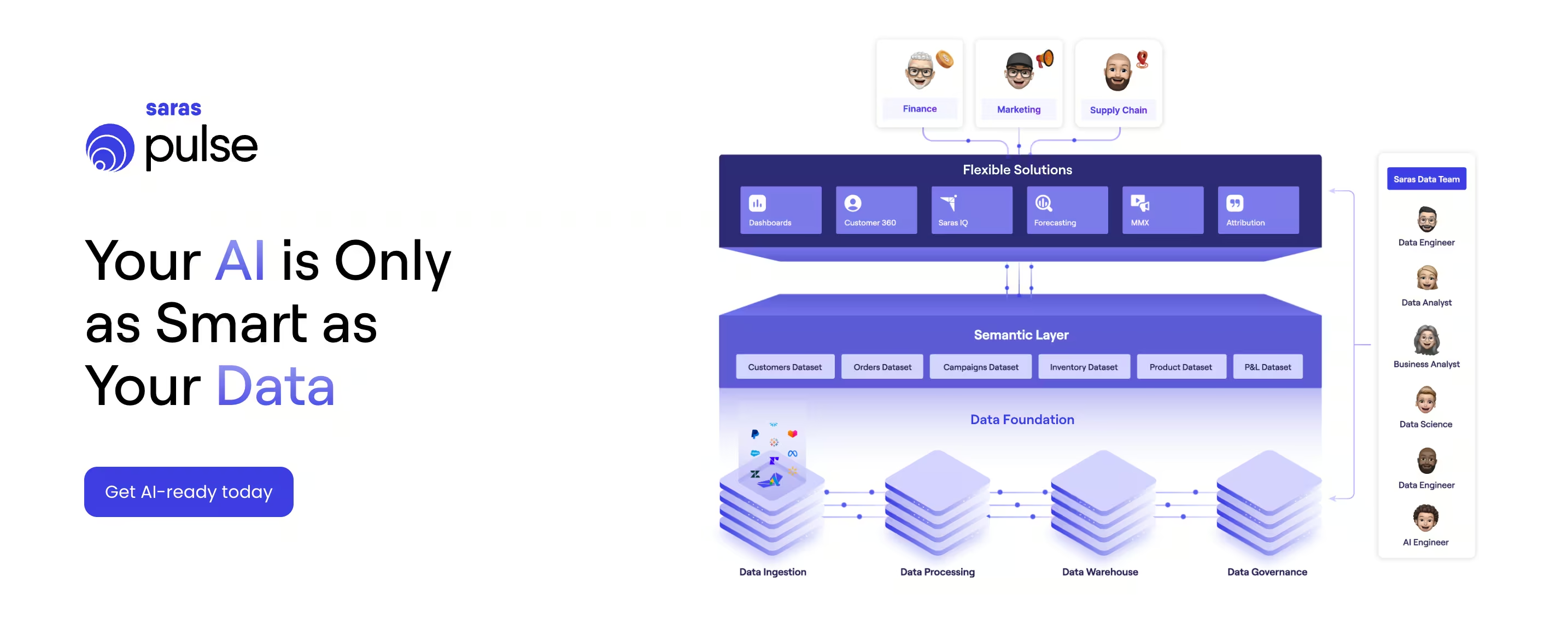
Saras iQ is a data and analytics platform made for eCommerce and DTC brands. It helps teams with customer segmentation by connecting data from over 200 platforms, including Shopify, Amazon, Meta Ads, Klaviyo, and GA4.
Marketers get a complete view of every customer and can build dynamic segments in minutes without needing technical support.
How Is Saras iQ Useful for Customer Segmentation?
Saras iQ unifies customer data across sources and updates segments automatically using live data from Saras Daton. Teams can spot high-value buyers, predict churn, and personalise campaigns without manual exports or complex setup.
This results in faster segmentation, accurate insights, and better targeting across channels.
Key Features of Saras iQ
1. Daily-refreshed segmentation: Saras iQ's segmentation engine is described as "dynamic" and "auto-updating". Segments refresh automatically as new data comes in, ensuring they always reflect the latest customer behavior

2. Unified customer profiles: The platform connects various data sources to merge all relevant events into a "unified customer profile" or "single source of truth". This combines data from marketing, sales, and orders to give a 360-degree view of each customer.
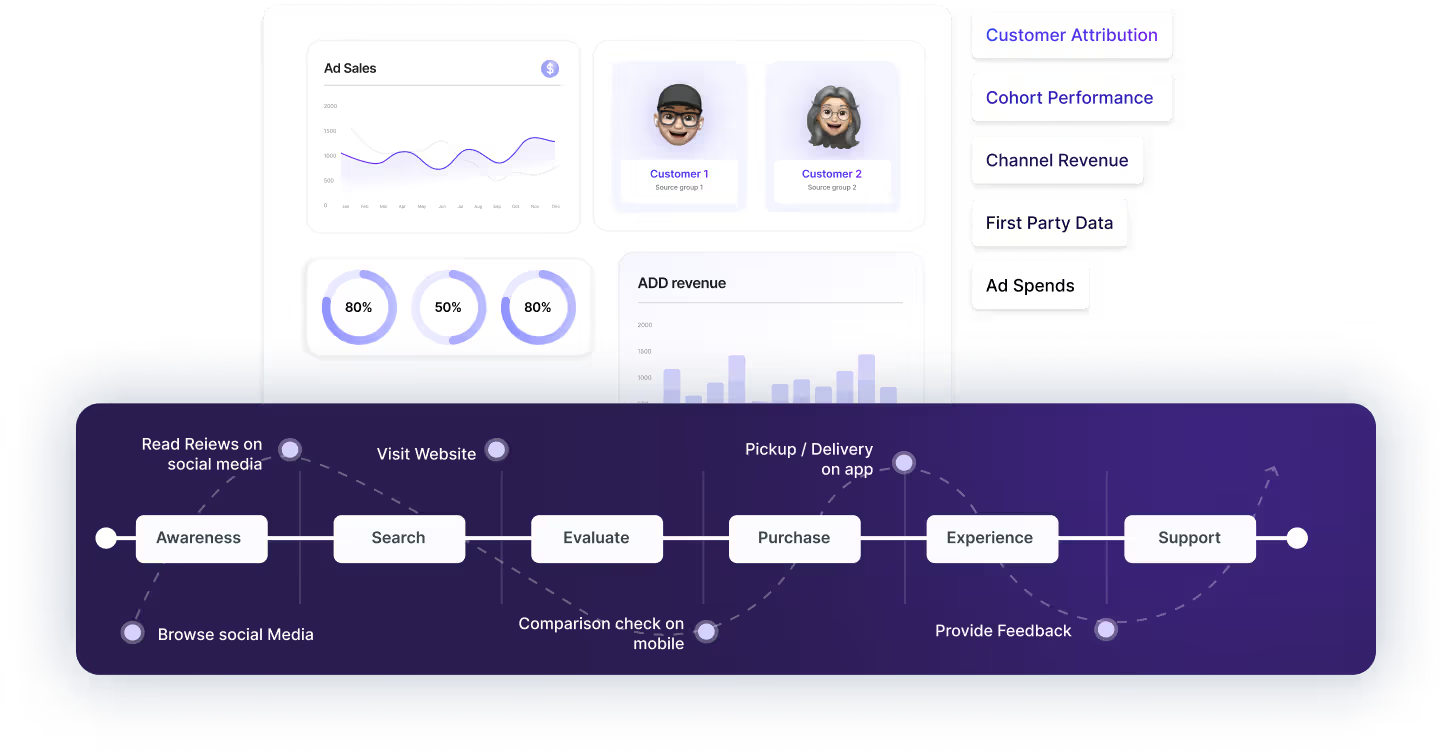
3. AI-powered predictions: Saras iQ uses AI/ML algorithms within its cohort analysis to provide deeper insights. This feature helps businesses forecast lifetime value (LTV) and churn risk.
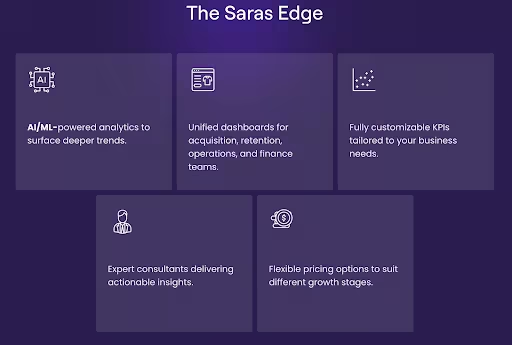
4. Visual segment builder: The platform allows users to create segments using simple dropdown menus and conditions in an intuitive interface, eliminating the need for a data analyst or SQL knowledge.
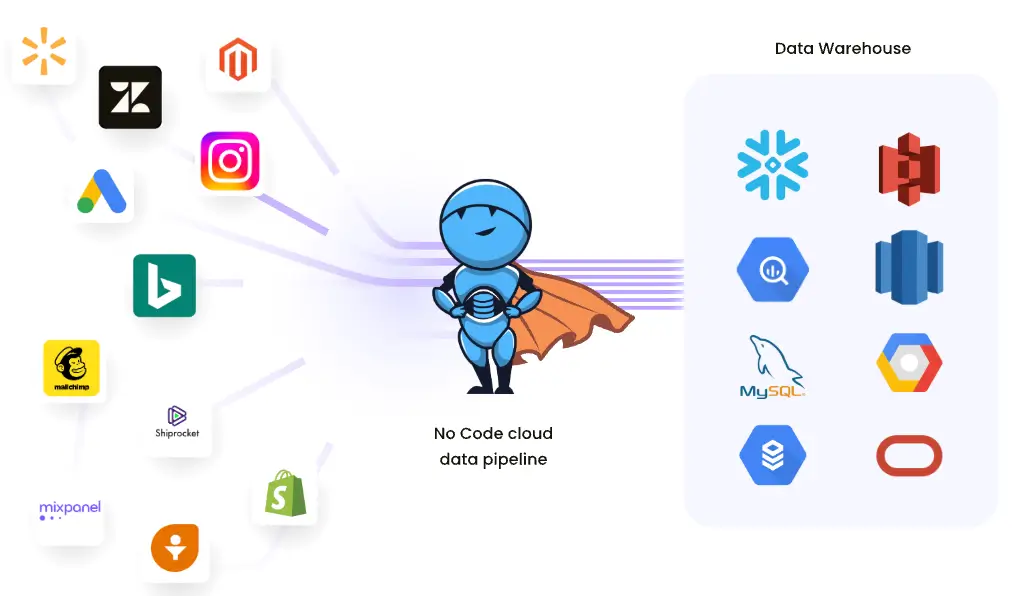
5. Extensive integrations: Over 200 connectors, including Shopify, Amazon, Klaviyo, Meta Ads, and GA4, help centralize data fast.
Saras iQ - Pros and Cons
| Pros | Cons |
|---|---|
| No-code setup that’s easy for all teams | May require structured data for the best results |
| Real-time insights remove manual work | Best suited for mid- to large-scale brands |
| Deep integrations with eCommerce platforms | Smaller businesses might not need every feature |
| Secure data governance with Saras Daton | Advanced analytics take time to master |
Saras iQ Pricing
Saras iQ Essentials starts at $1,999/month for Shopify brands with $10M-$50M in annual revenue. Saras iQ Enterprise, for $50M-$500M brands, is custom-priced.
In this 9Operators Podcast, Krishna Poda shares how Saras iQ and IQ helped brands like HexClad and Ridge refine their customer segmentation strategies. By moving beyond static reports, these brands gained daily visibility and AI-driven insights that improved how they understand and target their audiences.
2. Contentsquare
Contentsquare is a customer experience analytics and customer segmentation platform that helps businesses understand user behaviour and identify growth opportunities. It combines behavioural, UX, and product analytics to help marketing and product teams improve engagement and conversion through data-backed insights.
Key Features of Contentsquare
- Experience Analytics: Captures complete user journeys without manual tagging.
- Voice of Customer: Integrates surveys and feedback for qualitative insights.
- AI-Powered Insights: The Sense AI agent provides instant analysis and recommendations.
- Session Replay & Heatmaps: Visual tools to detect friction points in the customer journey.
Contentsquare - Pros and Cons
| Pros | Cons |
|---|---|
| Unified analytics with AI insights | Pricing increases quickly with higher data volume |
| Strong behavioural data visualisation | Limited direct eCommerce segmentation |
| 100+ integrations | Setup may be complex for beginners |
Contentsquare Pricing
Contentsquare offers a Free plan (up to 20k sessions/month), a Growth plan starting at $40/month (billed annually), and custom pricing for Pro and Enterprise tiers based on session volume and feature access.
3. Amplitude Personas
Amplitude Personas is a customer segmentation tool built to help SaaS and digital product teams understand user behavior in depth. It segments users based on engagement patterns, product usage, and conversion paths, making it easier to identify high-value audiences and refine retention strategies.
Key Features of Amplitude Personas
- Behavioral Cohorts: Create segments based on specific in-app actions and habits.
- Journey Analytics: Visualize how user groups move across product stages.
- Predictive Audiences: Identify users most likely to convert or churn.
- Feature Experimentation: Test new features and evaluate performance impact in real time.
Amplitude Personas - Pros and Cons
| Pros | Cons |
|---|---|
| Advanced behavioral and predictive segmentation | Learning curve for new users |
| Strong event-based analytics for SaaS | Not tailored for retail or eCommerce workflows |
| Unlimited data sources and destinations | Some advanced features locked behind higher plans |
Amplitude Personas Pricing
Amplitude offers a Starter plan (Free) with 50K MTUs and up to 10M events. The Plus plan starts at $49/month (billed annually) with behavioral cohorts and segmentation tools. Growth and Enterprise plans are custom-priced, including advanced experimentation, predictive audiences, and dedicated account management.
4. Qualtrics
Qualtrics is a customer segmentation platform focused on market research and customer experience analytics. It helps teams segment audiences based on demographic, psychographic, and behavioral data collected through surveys, web interactions, and digital touchpoints. It’s widely used by marketing, product, and CX teams to understand sentiment and improve engagement strategies.
Key Features of Qualtrics
- AI-Driven Segmentation: Groups customers using data from surveys, website feedback, and social listening.
- Predictive Insights: Uses machine learning to anticipate customer needs and satisfaction levels.
- Survey Automation: Builds, distributes, and analyses large-scale surveys across channels.
- Integrations: Works with CRM, marketing, and analytics tools for unified audience profiles.
Qualtrics - Pros and Cons
| Pros | Cons |
|---|---|
| Combines survey data with behavioral analytics | Limited native eCommerce focus |
| Excellent for brand and CX segmentation | Complex setup for smaller teams |
| Strong AI capabilities for predictive analysis | Higher cost for enterprise features |
Qualtrics Pricing
Qualtrics pricing is custom-based, depending on data volume, users, and chosen modules. Most teams start with a R
5. Segment (Twilio)
Segment by Twilio is a customer data platform that helps teams unify data from hundreds of sources to build precise customer segments. It’s ideal for marketing and analytics teams that rely on first-party data to create targeted campaigns and track customer journeys across touchpoints.
Key Features
- Data Unification: Collects and organizes customer data from 700+ sources, including CRMs, apps, and ad tools.
- Custom Segmentation: Allows teams to define segments using real-time behavioral and transactional data.
- Integrations: Connects easily with BI, analytics, and marketing platforms for activation.
- Developer Flexibility: Advanced APIs and functions for custom workflows.
Pros and Cons
| Pros | Cons |
|---|---|
| Highly extensible with vast integrations | Developer setup required for full functionality |
| Real-time data syncing across tools | Steeper learning curve for non-technical users |
| Enables full-funnel data visibility | Limited visualization options compared to analytics-focused tools |
Segment Pricing
Segment offers a Free plan for small teams, a Team plan starting around $120/month, and Business plans with custom pricing based on event volume and integrations.
6. Optimove
Optimove is a customer segmentation and CRM marketing platform designed for retention and lifecycle management. It helps brands create dynamic, data-driven customer segments to power personalized campaigns across email, SMS, and digital channels.
Key Features
- Micro-Segmentation: Builds highly granular audience groups based on CRM, behavioral, and transactional data.
- Predictive Modelling: Identifies customer lifetime value, churn probability, and engagement trends.
- Customer Movement Tracking: Monitors how users shift between segments over time.
- Cross-Channel Orchestration: Automates engagement across marketing platforms.
Pros and Cons
| Pros | Cons |
|---|---|
| Excellent for retention-focused marketing | Complex for beginners or small teams |
| Predictive analytics for proactive engagement | Premium pricing for full capabilities |
| Deep CRM and eCommerce alignment | Requires robust data setup for accuracy |
Optimove Pricing
Optimove provides custom pricing based on data size, number of users, and campaign volume. A demo-based quote is available for enterprise and mid-market teams seeking advanced retention segmentation.
7. Kissmetrics
Kissmetrics is a marketing and product analytics tool that helps eCommerce and SaaS businesses track user behavior, funnels, and customer journeys. It segments audiences based on actions such as purchases, engagement frequency, or funnel stage, giving marketers a clear picture of how customers interact across touchpoints.
Key Features
- Behavioral Cohorts: Analyze groups of users based on activity over time.
- Funnel Analysis: Identify where users drop off and optimize conversion steps.
- Revenue Tracking: Connect marketing performance to actual revenue.
- Integrations: Works with email, ad, and analytics tools for campaign tracking.
Pros and Cons
| Pros | Cons |
|---|---|
| Excellent for funnel-based segmentation | Limited real-time personalization |
| Strong analytics for marketing and retention | Slightly dated UI compared to newer tools |
| Integrates easily with eCommerce platforms | Pricing scales quickly with data size |
Kissmetrics Pricing
Kissmetrics offers custom pricing based on monthly tracked users (MTUs) and data needs. Plans typically start around $25/month, with advanced analytics and unlimited event tracking available for enterprise customers on request.
8. Avery AI
Averi AI is an AI-driven customer segmentation software designed to automate audience creation and campaign targeting. It combines behavioral, demographic, and psychographic data to generate predictive customer profiles, helping brands tailor marketing actions in real time.
Key Features
- AI-Powered Segmentation: Automatically identifies high-value, at-risk, and potential customers.
- Behavior Prediction: Uses machine learning to anticipate churn and purchase intent.
- Automated Campaign Targeting: Activates customer segments directly in marketing tools.
- Real-Time Updates: Refreshes audience data continuously based on new activity.
Pros and Cons
| Pros | Cons |
|---|---|
| Automated and adaptive segmentation | Emerging tool with limited enterprise adoption |
| Fast audience generation through AI workflows | Fewer integrations than established competitors |
| Streamlined for marketing automation | Feature set still expanding |
Averi AI Pricing
Averi AI typically start around $500/month per annum, with advanced analytics and unlimited event tracking available for enterprise customers. Businesses can request a demo-based quote tailored to their segmentation and activation needs.
9. Bloomreach Engagement
Bloomreach Engagement is an omnichannel customer segmentation and marketing platform built for B2C and eCommerce brands. It unifies data from online stores, CRMs, and analytics tools to create actionable customer segments that drive personalized marketing across email, web, and mobile.
Key Features
- Unified Data Layer: Combines transactional, behavioral, and product data in one view.
- Behavioral Segmentation: Builds segments based on user actions, frequency, and lifetime value.
- Campaign Orchestration: Automates personalized outreach across multiple channels.
- AI Recommendations: Delivers product and content suggestions tailored to customer behavior.
Pros and Cons
| Pros | Cons |
|---|---|
| Strong eCommerce and retail focus | Pricing tailored mainly for mid-to-large brands |
| Easy-to-use marketing interface | Advanced analytics may need setup support |
| Real-time customer engagement capabilities | Limited native support for small-scale startups |
Pricing
Bloomreach Engagement offers custom pricing based on business size, monthly active users, and data sources. A free demo and personalized quote are available for eCommerce teams looking to scale omnichannel engagement.
Benefits of Customer Segmentation Software
Companies using AI-driven segmentation see up to a 30% lift in conversions and a 25% increase in campaign ROI within the first year. The real advantage comes from turning insights into precise, consistent, and profitable actions rather than just grouping customers.
1. Pinpoint the Customers Who Drive Profitability
Segmentation software helps identify high-value groups based on purchase frequency, lifetime value, and channel preference. Instead of spending broadly, teams can focus acquisition and retention budgets on the customers who generate the most revenue.
2. Predict Churn Before It Happens
AI-powered segmentation tools flag early signals of disengagement such as reduced purchase activity or declining open rates. This allows brands to deploy retention campaigns before churn occurs, improving lifetime value and stabilizing recurring revenue.
3. Personalize Campaigns Without Guesswork
With unified customer profiles and behavioral data, marketers can automate personalized campaigns across email, ads, and SMS. Instead of relying on intuition, every message aligns with customer behavior and timing.
4. Reveal Hidden Growth Opportunities
Segmentation software uncovers under-served or emerging segments. For example, occasional buyers with high upsell potential. These insights help teams design targeted promotions or cross-sell strategies that directly expand revenue streams.
5. Align Marketing, Sales, and Product Teams Around the Same Data
When every team uses the same segmentation view, decisions become faster and more consistent. Marketing focuses on acquisition efficiency, sales on qualified leads, and product on improving experience for the most valuable cohorts.
6. Measure Campaign ROI by Customer Group
Rather than tracking campaign results in isolation, segmentation software ties performance back to specific audience groups. This makes it easier to attribute revenue, refine targeting, and double down on campaigns that deliver measurable impact.
7. Reduce Wasted Spend Through Smarter Targeting
Accurate segmentation prevents ad budgets from being spent on low-value audiences. Every impression, click, and conversion is tracked against defined cohorts, helping marketers spend efficiently and improve ROAS.
Must-Have Features in Customer Segmentation Software
Every strong customer segmentation software should do six things well — unify customer data, adapt in real time, predict behavior, measure value, stay connected, and protect data.
Here’s what that looks like in practice:
| Feature | What It Does | Why It Matters |
|---|---|---|
| Unified Customer Profile | Brings all customer data (like transactions, behavior, and engagement) into a single, consistent view. | Gives every team the same truth about who the customer is, improving decision accuracy. |
| Dynamic Segmentation | Updates customer groups automatically as behavior changes. | Keeps campaigns relevant without constant manual adjustments. |
| Predictive Intelligence | Uses AI to forecast churn, lifetime value, and conversion likelihood. | Helps teams act early on retention or upsell opportunities. |
| RFM & Behavioral Scoring | Classifies customers by how recently and frequently they buy, and how much they spend. | Makes targeting sharper by prioritizing high-value audiences. |
| Real-Time Integrations | Syncs live data with CRMs, analytics, and ad platforms. | Ensures every touchpoint reflects current customer behavior. |
| Data Privacy and Compliance Controls | Enforces consent management and GDPR-ready processes. | Protects customer data integrity and avoids compliance risks. |
How to Choose the Best Customer Segmentation Software for Your Business
Choose software that matches your growth goals, suits your data readiness, and proves its ROI. Focus on key factors like ease of use, scalability, AI capability, and integration quality.
Step 1: Start with the Outcome You Want to Drive
Every company uses segmentation differently. Define whether your focus is retention, customer lifetime value, or better targeting accuracy. This clarity helps you eliminate tools that look powerful but don’t solve your core challenges.
Step 2: Assess How Easily Your Team Can Use It
If your marketing team depends on analysts or IT to create every segment, adoption will stall. Prioritize platforms with no-code builders, visual dashboards, and automation so business users can act on insights instantly.
Step 3: Make Sure It Scales with Your Growth
Your data volumes, channels, and customer types will grow fast. Choose software that can manage increasing sources and segment complexity without breaking workflows or slowing down sync times.
Step 4: Choose Tools That Turn Data into Decisions
AI-powered features like churn prediction, next-best action, and LTV forecasting convert insights into measurable outcomes. Reports show what happened. You need to know what to do next.
Step 5: Check if It Fits into Your Existing Stack
The best segmentation platform complements what you already use (CRMs, ad platforms, and BI tools.) Seamless integrations prevent duplication, reduce manual work, and maintain one version of customer truth.
Step 6: Compare Transparency, Not Just Price
Low-cost tools can become expensive if they charge extra for data limits, users, or integrations. Look for transparent pricing and hands-on onboarding support that ensures ROI from day one.
The right customer segmentation platform doesn’t just identify your customers. It helps you respond faster, anticipate their needs, and drive growth with focus.
Future Trends of Customer Segmentation Software
1. Real-Time Segmentation and Continuous Updates
Modern segmentation platforms are shifting from scheduled updates to live data syncing. Every new action, such as a click, purchase, or message, instantly refines a customer segment. This real-time visibility helps teams respond to intent as it happens, not after the moment has passed
2. Predictive and Prescriptive Intelligence
Segmentation tools are moving from describing audiences to predicting their next move. Machine learning models are already being used to forecast lifetime value, churn probability, and conversion potential. Some even suggest the next-best action directly within dashboards.
3. Privacy-First and Unified Customer Data Ecosystems
As privacy laws evolve, future-ready tools are built around first-party data and consent-based frameworks. These systems merge information from CRMs, analytics, and ad channels into one compliant ecosystem, giving every department a shared view of the customer.
Make Every Customer Insight Count with Saras iQ
Customer segmentation only works when insights drive real action. Saras iQ unifies customer, sales, and marketing data in one intelligent dashboard so teams can respond faster and make confident decisions.
Its strong infrastructure, AI-ready models, and self-serve analytics help you turn insights into measurable results without extra setup.
Ready to turn data into growth? Book a demo to see segmentation in action.
.svg)
.webp)
%201%20(1).svg)

.jpg)
%20Statistics%20in%202026.jpg)

%20Software%20for%20DTC%20Brands%20in%202026.png)
%20Setup%20Guide%20for%20Ecommerce%20Finance%20Team.png)




.webp)
.webp)
.webp)
.webp)
.webp)