Churn is rarely loud. It hides behind stalled cohorts, repeat rates that lose momentum, and segments that quietly stop buying even when paid channels look healthy. By the time topline revenue reflects the issue, the business has already absorbed months of avoidable damage, something that customer churn analysis makes painfully clear.
As brands mature, they outgrow retention guesswork. The real shift happens when teams move from reactive churn firefighting to predictive churn analytics. It is the point where data maturity becomes a competitive advantage. Also, with retention costing 5–7x less than acquisition, building this capability isn’t optional anymore.
This article breaks down customer churn analysis, the metrics operators track, and the steps used to uncover the causes behind attrition. It also explains how unified customer data, the kind created through Customer 360 models, strengthens churn visibility without turning this into a product pitch.
Is your data actually Decision-Grade?
9 questions. 3 minutes. Score your Profitability Visibility and Readiness for AI-driven growth.
Start Free Diagnostic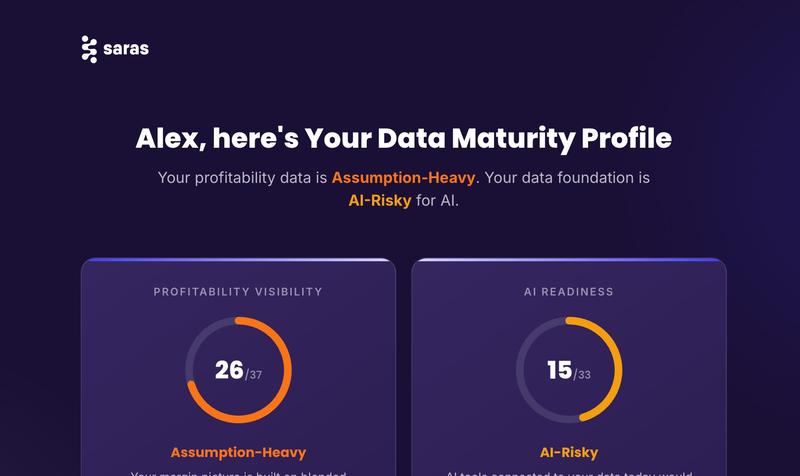
What Is Customer Churn Analysis?
Customer churn refers to customers who lapse, cancel, or stop engaging within a defined time window. Subscription brands measure cancellations or payment failures. eCommerce brands typically use inactivity windows — 60, 90, or 120 days depending on purchase cycle length.
Customer churn analysis is the process of identifying churned customers, detecting patterns behind their behavior, and using data to reduce the likelihood that other customers follow the same path.
Churn analysis as a multi-step analytical workflow: collect clean customer data, identify churned users, segment them by behavior or lifecycle stage, measure impact, and develop retention strategies that fix the underlying causes.
Churn analysis only works when operators can see behavioral, transactional, and support data in one place. Churn typically falls into two categories:
- Voluntary churn — when the product, communication, or experience no longer aligns with their expectations.
- Involuntary churn — failed payments, expired cards, missed renewals, and operational issues that interrupt purchasing even though intent remains.
Both matter because each erodes cohort strength and inflates acquisition pressure. Voluntary churn signals dissatisfaction or irrelevance. Involuntary churn signals operational inefficiency. A healthy churn model accounts for both.
The mechanics behind churn analysis rely heavily on segmentation: recency, frequency, monetary value, subscription status, fulfillment experience, and support interactions. Customer 360 models stitch these attributes into a unified profile.
Saras iQ: The AI Ecommerce Analyst for Shopify Brands Doing $20M+
Most Shopify brands at scale are making decisions from disconnected reports. Shopify, ad platforms, spreadsheets, all telling a different story. Saras iQ sits on top of a certified, AI-ready data foundation so your finance, marketing, and ops teams can ask business questions and get reliable answers instantly. No SQL. No hallucinations. No conflicting numbers.
What you can do with Saras iQ:
- Ask questions in plain English and get answers with visualisations, backed by SQL and business logic you can trace
- Get contribution margin, LTV, cohort analysis, and channel ROI on demand, without waiting for an analyst
- Flag issues and share insights to Slack, email, or Teams in one click
- Connect 200+ data sources including Shopify, Amazon, Meta, Google, and Klaviyo through a single AI-ready data layer
- Plug into Claude or any AI you already use via iQ MCP
Trusted by 200+ eCommerce brands doing $20M+.
Why Is Customer Churn Analytics Important?
Customer churn analytics matters because attrition erodes a business quietly and steadily. But with small improvements in churn, recurring revenue can increase dramatically; also, retention is cheaper and more predictable than acquisition. That logic extends directly to eCommerce.
Here’s why advanced churn analysis is indispensable for ecommerce teams:
1. Strengthens Retention and Lifetime Value
Repeat purchase behavior fuels financial stability. When churn analysis incorporates behavioral signals, order patterns, and product-level insights, retention becomes strategic, not reactive. Cohorts remain healthier for longer, and revenue stabilizes.
2. Protects Acquisition Efficiency
A weak retention foundation makes CAC unsustainable. Through churn rate analysis, operators can see which segments fail to recover acquisition costs and which cohorts never reach breakeven. This way, spend shifts immediately and become more disciplined.
3. Surfaces At-Risk Segments Before They Churn
Churn rarely happens without early-warning signals. Declining purchase frequency, stalled second-order conversion, subscription skips, and fulfillment delays often appear weeks before a customer lapses. Churn data analysis helps operators isolate these patterns across cohorts and campaigns.
4. Improves Behavioral Understanding Across the Customer Lifecycle
Patterns hidden within purchase intervals, category preferences, and post-purchase behavior help explain why customers drift. A structured approach to customer churn data analysis turns scattered events into actionable customer insights.
5. Enables More Accurate Personalization
Personalization is only effective when the customer's intent and timing are clear. Unified customer data (like recency, product affinity, order reliability, subscription behavior) ensures personalization reduces friction instead of contributing to churn.
Factors Behind Customer Churn
In most eCommerce businesses, churn rises because several friction points stack up at the same time, such as weak product consistency, fulfillment problems, disengaged communication, or poor post-purchase experience. These issues show up first inside customer behavior long before revenue feels the impact. This is where customer churn analytics gives operators a clear reading of how customers are drifting and why.
Below are the real drivers behind churn and the patterns teams usually uncover when they run proper customer churn analysis.
1. Poor Product or Service Quality
Product-driven churn happens when the experience fails to meet expectations. It rarely shows up only in product reviews; operators see it earlier in shrinking repeat purchase intervals, rising return rates, or customers abandoning key SKUs they previously purchased. When quality issues appear in the first or second order, churn accelerates because trust collapses early in the lifecycle.
2. Irrelevant Communication and Weak Personalization
Churn increases when communication stops reflecting customer behavior. Signals like declining open rates, lower engagement on replenishment flows, skipped subscriptions, or reduced response to loyalty prompts often appear weeks before customers fully lapse. Strong segmentation built on recency, frequency, spend, category affinity, and order patterns helps teams correct these issues before behavior solidifies into attrition.
3. Competitor Pricing, Offers, or Experience
Customers compare more than pricing. They compare convenience, delivery reliability, ease of returns, subscription flexibility, product bundles, and perceived value. When another brand offers a smoother experience or clearer benefits, churn rises even if your pricing is competitive. Churn rate analysis helps teams understand whether customers are defecting because of price, product gaps, or simply a more predictable experience elsewhere.
4. Lack of Perceived Value or Inconsistent Experience
Perceived value drops when customers don’t feel progression. The triggers are usually subtle: longer delivery times on the second order, inconsistent packaging, product substitutions, or support delays. These issues show up as erratic purchase intervals and shorter customer lifespans.
Key Metrics Used in Customer Churn Analysis
Effective churn modeling requires financial, behavioral, and lifecycle metrics working together. Here are the metrics that help you do customer churn analysis the right way:
| Metric | What It Tells You | Why It Matters for Churn Analysis |
|---|---|---|
| Churn Rate | Percentage of customers who lapse or cancel within a defined time window. | When paired with cohort views, it reveals true behavioral churn instead of misleading aggregate totals. Foundation of any churn data analysis workflow. |
| Customer Lifetime Value (CLTV) | The long-term value generated by each customer across their lifecycle. | Declining CLTV is often the earliest indicator of churn pressure. Helps teams pinpoint which segments, channels, or product pathways are deteriorating. |
| MRR Churn | Monthly recurring revenue lost from cancellations, downgrades, or involuntary churn. | Critical for subscription brands. Identifies whether churn is caused by poor experience or payment failures (a major driver highlighted by Stripe). |
| Net Promoter Score (NPS) | Customer sentiment and likelihood to recommend. | Useful only when paired with behavior. High NPS but low repeat rate usually signals operational friction, not satisfaction issues. |
| Customer Acquisition Cost (CAC) | Cost of acquiring a new customer. | Shows whether CAC is recoverable. If customers churn after one order, CAC becomes a loss, revealing unsustainable cohorts. |
| Repeat Purchase Rate | Percentage of customers who purchase more than once. | One of the strongest early predictors of churn. Falling repeat rates precede accelerated attrition, especially in fast-moving categories. |
| Time to Churn | How long customers remain active before lapsing. | It helps determine when interventions should occur, like replenishment nudges, subscription offers, or behavior-based triggers. Essential for lifecycle pacing. |
These metrics create the foundation for customer churn analysis and guide the structured workflow needed to diagnose churn accurately.
6 Steps to Conduct Customer Churn Analysis
Proper customer churn analysis is a workflow, not a dashboard. The strength of the process determines how early a brand can predict churn, segment it, and act before attrition compounds. Below are the six steps high-performing retention teams follow when they run churn analysis with discipline.
1. Gather Customer Data Across Platforms
Churn analysis only works when customer data is unified. eCommerce brands spread their customer signals across Shopify, subscription apps, paid media platforms, email service providers, customer support tools, and logistics systems. When these sources sit in isolation, patterns never line up correctly.
A single consolidated dataset of orders, events, behavior, subscription details, cancellations, fulfillment metrics becomes the source of truth. This is where tools like Saras Daton help teams replicate data from all platforms into the warehouse cleanly, without engineering overhead. Once the data sits in one place, operators can run customer churn analytics across lifecycle stages, not just single-channel behavior.
Signals that should always be pulled into your churn model include:
- Purchase intervals
- First-to-second order conversion
- Discount dependency
- Support ticket history
- Fulfillment reliability (first order vs. ongoing)
- Subscription skips or pauses
- Category or SKU-level progression
Once you have these foundations in place, churn analysis becomes more predictive.
2. Identify Churned Customers
Once data is centralized, the next step is defining churn for your category. Churn definitions differ:
- 60 days for fast-moving consumer goods
- 90–120 days for retail cycles
- subscription cancellation for replenishment businesses
This definition must be consistent across the organization. Inconsistent definitions are one of the biggest reasons operators misdiagnose churn. After defining the window, operators identify which customers lapsed and compare their behavior against healthy customers.
Key signals:
- How quickly they slowed their purchase frequency
- The SKU or category where decline began
- Whether promotions were required to drive each order
- Whether a support or fulfillment event preceded the lapse
This step forms the base of your customer churn data analysis and sets up segmentation.
3. Segment Customers by Behavior, Source, or Cohort
Segmentation transforms churn from a vague concept into a clear insight. Operators segment customers based on recency, frequency, spend, product affinity, subscription behavior, and acquisition channel. When these segments are stable, churn becomes measurable and predictable.
Teams using Saras iQ structure cohorts naturally:
- First-time buyers vs. multi-order buyers
- Subscription vs. non-subscription customers
- Discount-led customers vs. full-price customers
- Customers with early fulfillment friction
- Customers in high-return categories
Segmentation exposes patterns that never appear in aggregate churn rate.
4. Visualize and Identify Churn Patterns
Visualization is where churn analysis becomes actionable. Operators compare:
- Cohort curves over time
- Repeat rates by channel
- Churn by SKU or product bundle
- Churn linked to discount events
- Churn triggered by subscription behavior
- Churn following slow fulfillment windows
When the data is visualized clearly, you can easily detect patterns like drop-offs after the first order, fulfillment-induced lapses, heavy reliance on discounts, or customers attracted by a single SKU who never broadened purchase behavior.
Saras iQ’s visual models make this easier by stitching channel, order, and fulfillment data into cohort curves. For eCommerce teams, this is the most crucial phase of churn rate analysis: it shows which levers matter and which ones don’t.
5. Run Root-Cause Analysis
This step converts visuals into understanding. Root-cause analysis usually reveals five common truths:
- The second order is the most fragile point in the lifecycle
- Fulfillment delays create silent churn weeks before a customer lapses
- Single-SKU repeaters are at higher churn risk
- Discount-first cohorts rarely mature into profitable customers
- Subscription churn spikes after two consecutive skips or pauses
Root-cause analysis works when operators drill into data by combining behavioral, transactional, and operational signals.
6. Develop and Implement Re-Engagement Strategies
Churn analysis only matters when it leads to intervention. Once the root causes are clear, retention teams build targeted re-engagement strategies:
- Replenishment nudges based on expected reorder windows
- Cross-sell prompts tied to category affinity
- Loyalty adjustments for customers stuck in low-value cycles
- Personalized recommendations to broaden product exposure
- Subscription incentives timed around predicted churn points
- Operational fixes when churn stems from fulfillment friction
This is where customer churn analytics becomes a full operator workflow.
Best Practices to Reduce Customer Churn
The best retention teams in eCommerce don’t rely on discounts, win-back emails, or last-minute offers. They build structural practices that reduce friction, reinforce value, and keep customers engaged across their lifecycle. Below are the practices that consistently reduce churn in ecommerce and DTC environments.
1. Improve Customer Service Responsiveness and Resolution Quality
Support quality is one of the clearest churn predictors. Customers tend to tolerate slow shipping more than inconsistent communication. That’s why operators must always track service-to-resolution time, first-contact response time, and support ticket clustering.
High-performing teams tighten support SLAs during sensitive lifecycle stages: first order, first subscription renewal, or high-AOV purchases. Quick, accurate responses stabilize customers before they disengage.
2. Strengthen Personalization Through Behavioral and Lifecycle Data
Personalization reduces churn when it reflects real customer behavior. Brands that use recency, category affinity, time-to-churn, subscription signals, and fulfillment experience create communication that feels relevant and well-timed. This is where customer churn data analysis becomes a retention tool instead of a reporting function.
Examples of behavior-led personalization:
- Replenishment reminders that match actual consumption cycles
- Dynamic cross-sells based on product trajectory
- Category-specific content for multi-category buyers
- Proactive messages after fulfillment friction
These interventions stabilize purchase intent without relying on promotions.
3. Monitor Customer Behavior Continuously
Lower engagement, decreasing cart value, longer reorder gaps, subscription skips, or lack of interest in new products are some of the key indicators that you must track. Teams using Saras iQ monitor this data at the segment level, which makes it easier to detect when specific groups start sliding. Ongoing monitoring drives more accurate forecasting and more targeted interventions.
4. Use Predictive Analytics to Identify High-Risk Customers
Predictive modeling is the next level of churn prevention. Instead of reacting to churn after it happens, predictive models flag customers who are likely to churn based on behavioral patterns. Common predictors include:
- Extended gaps between orders
- Stagnation after the first purchase
- Changes in SKU preference
- Negative support interactions
- Low engagement with lifecycle communication
Saras iQ’s predictive capabilities identify risk windows by combining behavioral, transactional, and operational indicators. This aligns with modern approaches to churn rate analysis, where risk scoring becomes more valuable than historical averages.
Here is one customer churn analysis example that leveraged our solution:
BPN used churn-risk modeling to identify lapsed but high-value subscribers and reactivated them with targeted retention flows, generating roughly $900K in incremental revenue and driving a 12% re-purchase rate among previously churned customers (read full case study)
5. Engage High-Risk Customers with Targeted Interventions
Interventions work best when they match the customer’s specific reason for churn. High-risk customers are not a single group; several segments exist. Retention teams design interventions that address the underlying issue. This can include subscription incentives, broader product exposure, loyalty nudges, or improved fulfillment expectations.
6. Improve Customer Experience Across the Lifecycle
Experience consistency is the strongest defense against churn. This includes:
- Reliable shipping
- Clear communication
- Product quality that matches expectations
- Consistent packaging
- Frictionless returns
Experience-led brands maintain stable cohorts even when competitors discount aggressively. This stability is reflected directly in customer churn analytics as stronger repeat curves and longer customer lifespans.
Predict and Reduce Customer Churn Before It Happens with Saras Analytics
Once the core practices are in place, the remaining challenge is operational visibility. Churn prevention becomes far more effective when operators see early-warning signals in one place. Saras Analytics supports this by unifying customer data through Daton, and enabling behavior-driven segmentation, cohort analysis, and predictive churn visibility through Saras iQ.
Operators gain:
- Real-time views of at-risk customers
- Cohort curves showing where churn accelerates
- Purchase-frequency and time-to-churn patterns
- Subscription churn drivers
- Friction hotspots caused by fulfillment or support delays
Saras iQ doesn’t fix churn by itself; rather, it exposes the conditions that create churn so operators can intervene early. The combination of Daton’s data unification and Saras iQ’s behavioral modeling creates a clear pipeline from raw data to retention action. This is the infrastructure that helps eCommerce teams reduce attrition, strengthen cohorts, and grow LTV without relying on bigger acquisition budgets.
Talk to our data consultant now if you want to build a unified churn prevention workflow grounded in real customer behavior.
.webp)
.svg)
%201%20(1).svg)







.jpg)

%20Statistics%20in%202026.jpg)



%20Software%20for%20DTC%20Brands%20in%202026.png)








%20Setup%20Guide%20for%20Ecommerce%20Finance%20Team.png)


















.webp)
.webp)
.webp)
.webp)
.webp)